marketing & audience engagement
As the editor-in-chief also in charge of business relations and marketing, I carry the responsibility of ensuring we reach our audience and market our newspaper in the right way and to the right people. Although it took me until my senior year to begin experiencing the behind-the-scenes strings of withholding public influence and viewership, I’ve put a major emphasis on measuring the success of our goals using data and analytics this year.
Built in analytics on our online platforms has been incredibly telling in this process, and I’ve learned a lot about ways to intrigue the specific age groups and demographics we see on our site often. Here’s a look at that process.
Analytics
Website
In the past year, since I built this website in my junior year, The Stentorian’s online statistics have steadily increased and followed the trend of how thick our newspaper of the month was, and how much marketing our team did in-person, on social media and online, and to local businesses.
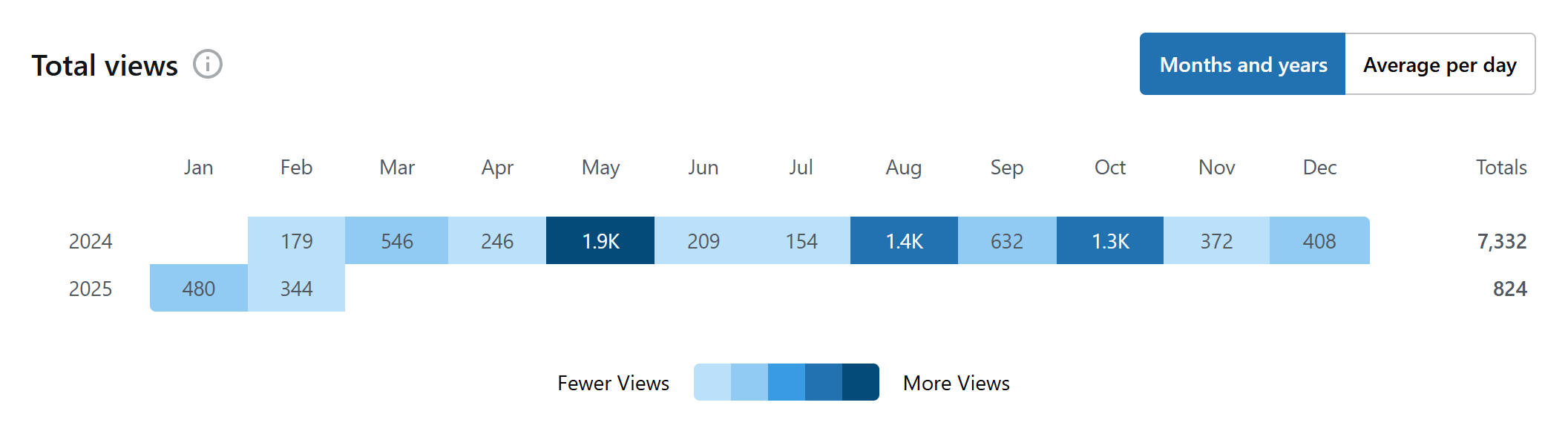
This can be seen in the image below, where the 1.9k views in May 2024 correlated with our school’s graduation ceremony date (where I distributed 1000 copies to parents, teachers, and attendees). August 2024 correlated with the first day of the 2024-25 school year, and October 2024 correlated with student applications for clubs and research programs at our school (the theme of our issue was on clubs, events, and application tips). In November, December, and January, the editorial board fell a bit behind normal publication schedule because due to all of us being seniors, we also had a commitment to college applications.
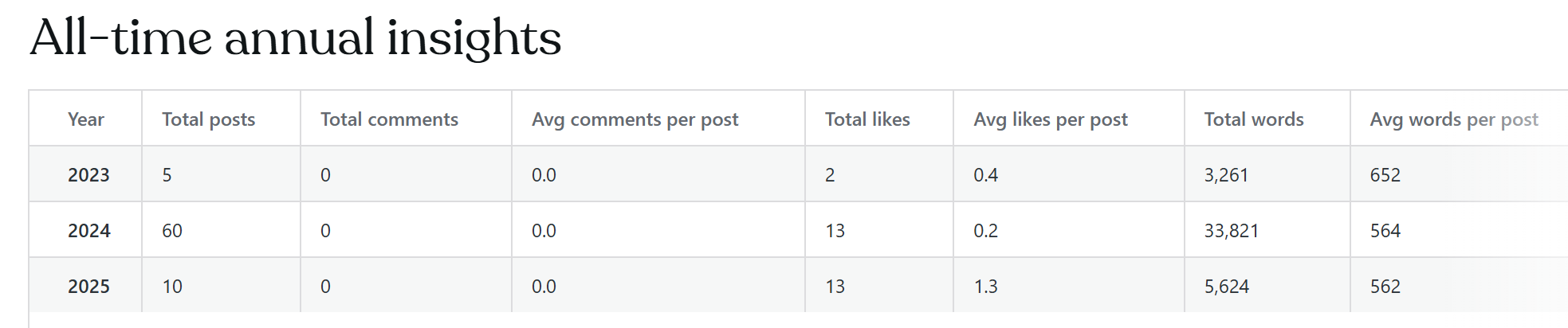
As shown below, my three pieces about school statistics and my opinions on school administrative policies garnered thousands of views on their own. Of the top posts of all time on our site, I authored the top three (excluding the Home page and News & Features page).

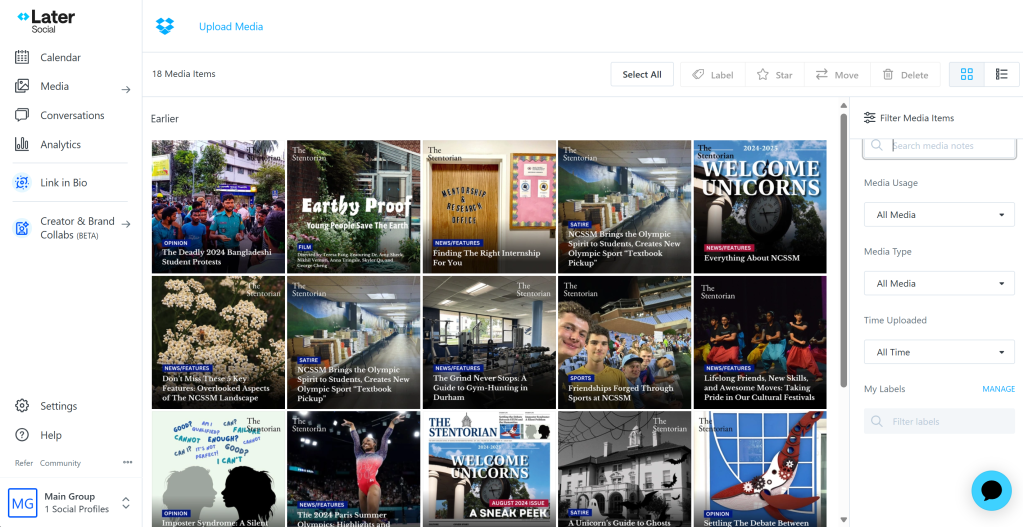
After identifying social media presence as a priority, I was first designated as the Multimedia Editor in my junior year to publish our daily content. Each time an article is posted online, we promote that content on Instagram and Facebook. Each section is additionally responsible for creating one piece of Instagram content per week. Creating a consistent posting schedule ensures are viewers are not overwhelmed with excessive media and receive a balance in the type of content released.
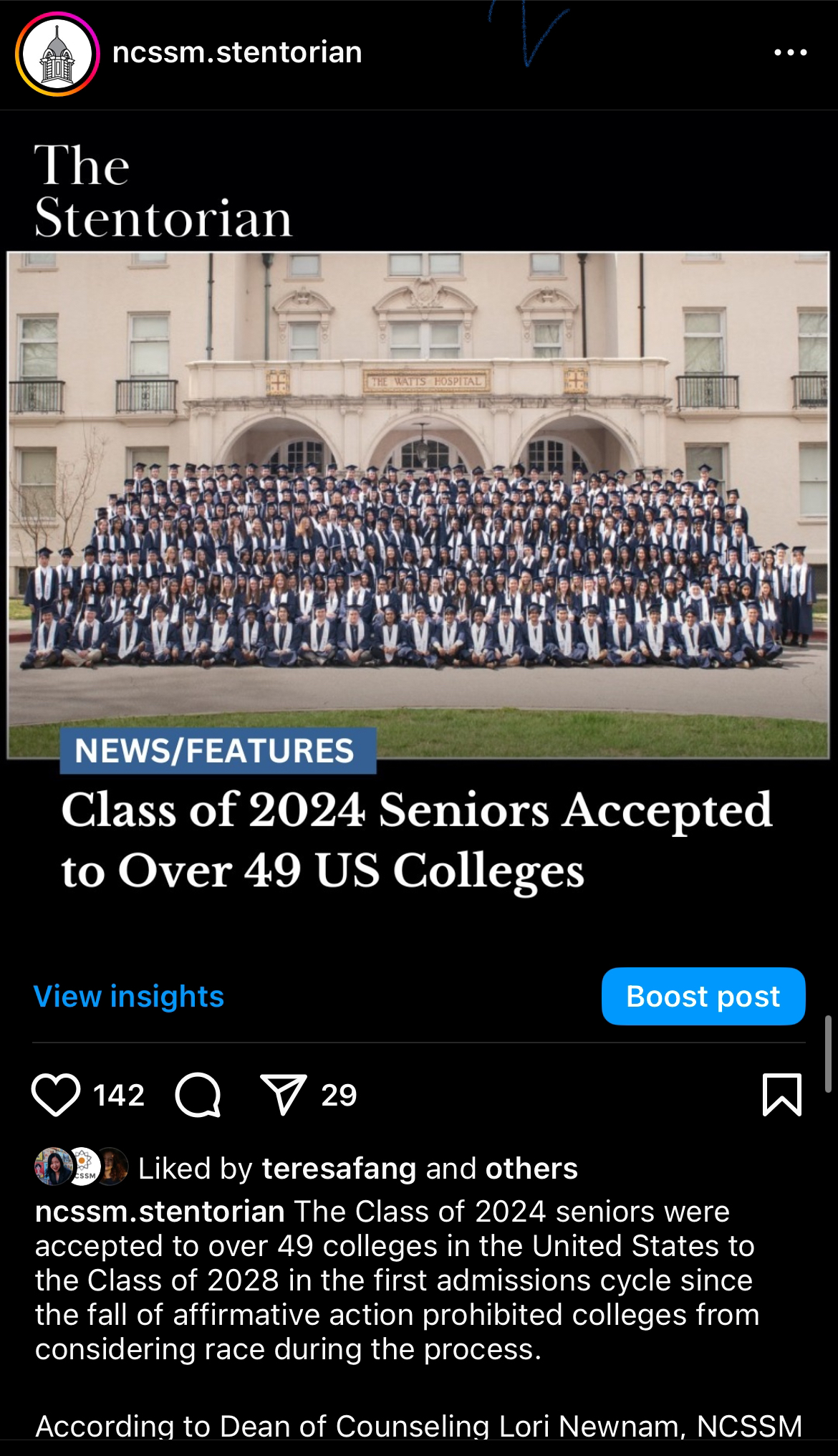
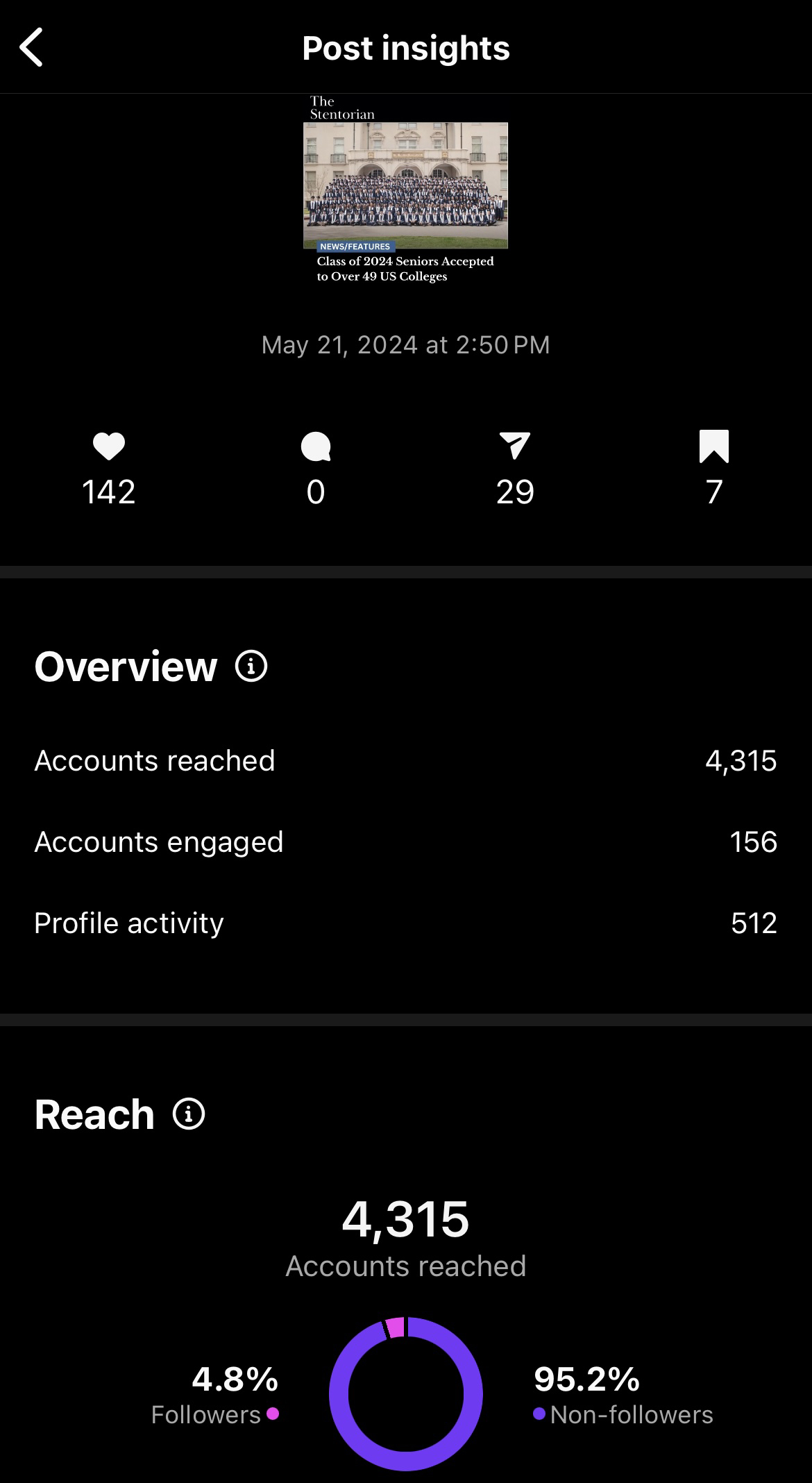
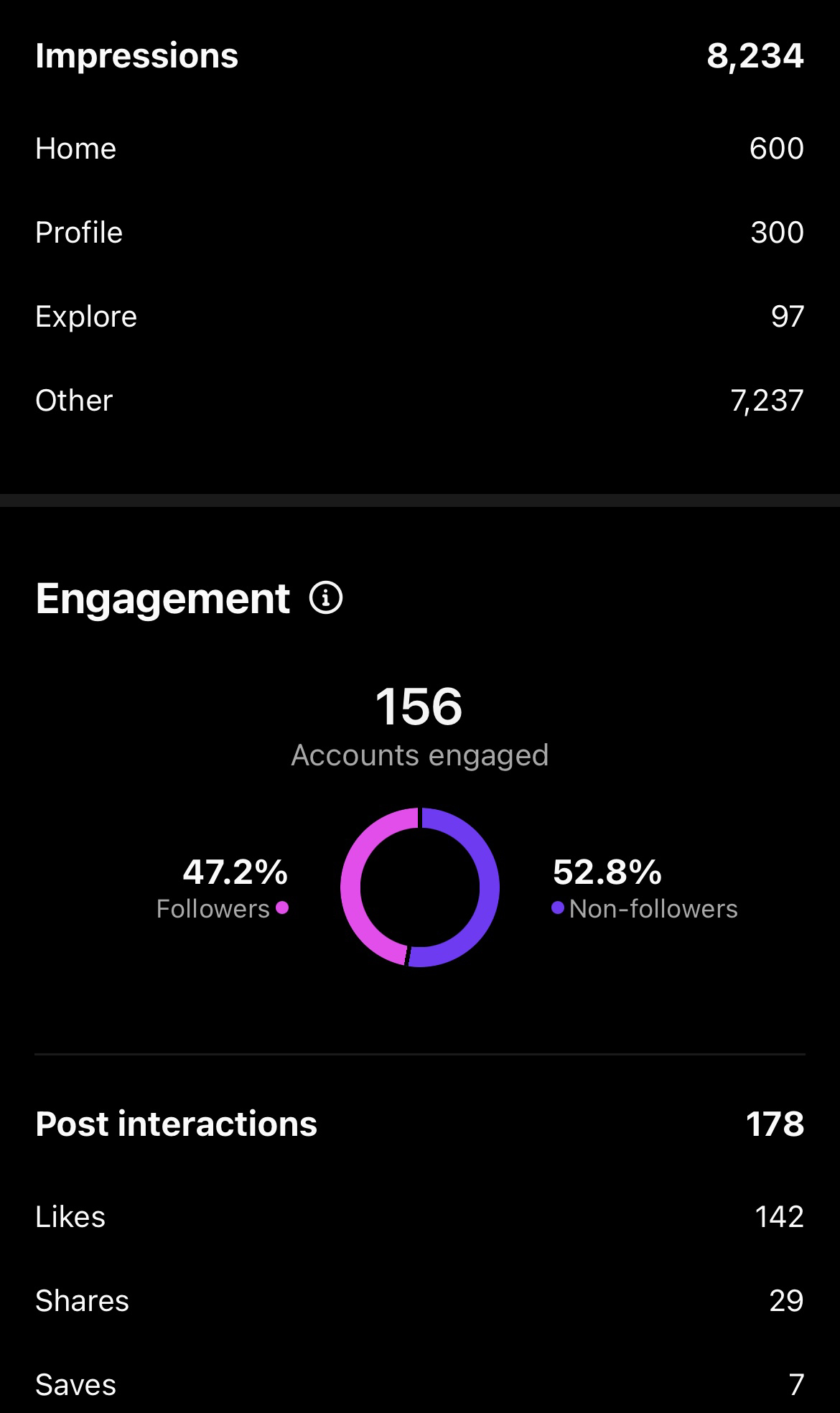
We have also achieved record analytics in the past year on several Instagram posts as well. For example, the following post garnered numerous likes, shares, and follows. It was printed on our last issue of the 2023-24 school year in our special Commencement Issue. Parents reported to me that they really appreciated getting to read the statistics of where the senior class went around the world.
Audience Engagement
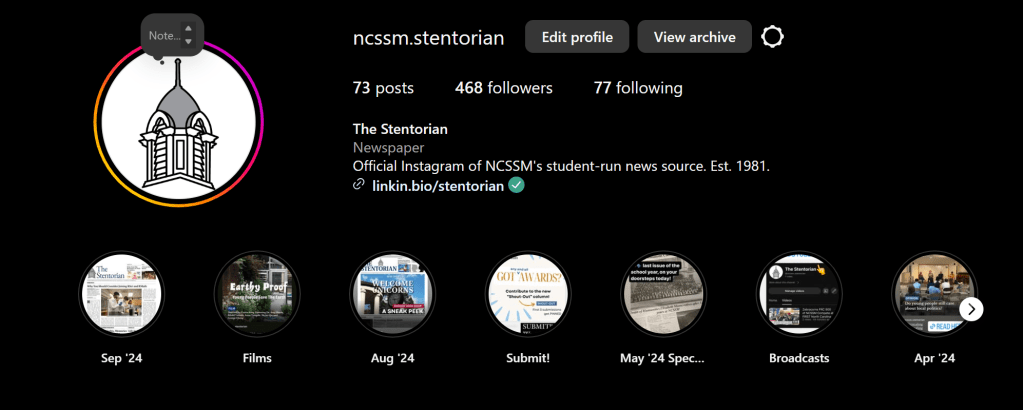
To boost our engagement on our new online website, I added a link to our Instagram bio that is more convenient and efficient than putting our homepage link (in my opinion). This link correlates our published Instagram posts with the articles they correspond to on our website, allowing Instagram users to click on the post of the story they would like to read. This then leads them to the story on our online site.
The website is designed in a way that prioritizes 1) timely news or community-centric articles and 2) most popular reads. This is why when you first open our website, you will see on the homepage stories that are centered around the latest events in school or politics, as well as opinion stories, which our student body has an influx of and high tendency to write. We also have the latest broadcast segment for easy access to multimedia news.


In the image above, the rightmost column is our sidebar. First, to promote our written content, I manually built a “trending stories” widget to allow users to click through the most popular stories published in the past 30 days. This feature enables quick and easy access to stories that may interest them. Below that is the “welcome contributions” widget, which directs users to email our dedicated newspaper feedback email address with their story pitches, or any feedback or questions. Thirdly, we thank our sponsors of the month by featuring their stores, logos, and websites. Depending on the design of the website due to our sponsors’ corresponding advertising packages, we will put ads around the website in specific locations and sizes. For student organization ads, we do that for free to promote student engagement.
Print Revival
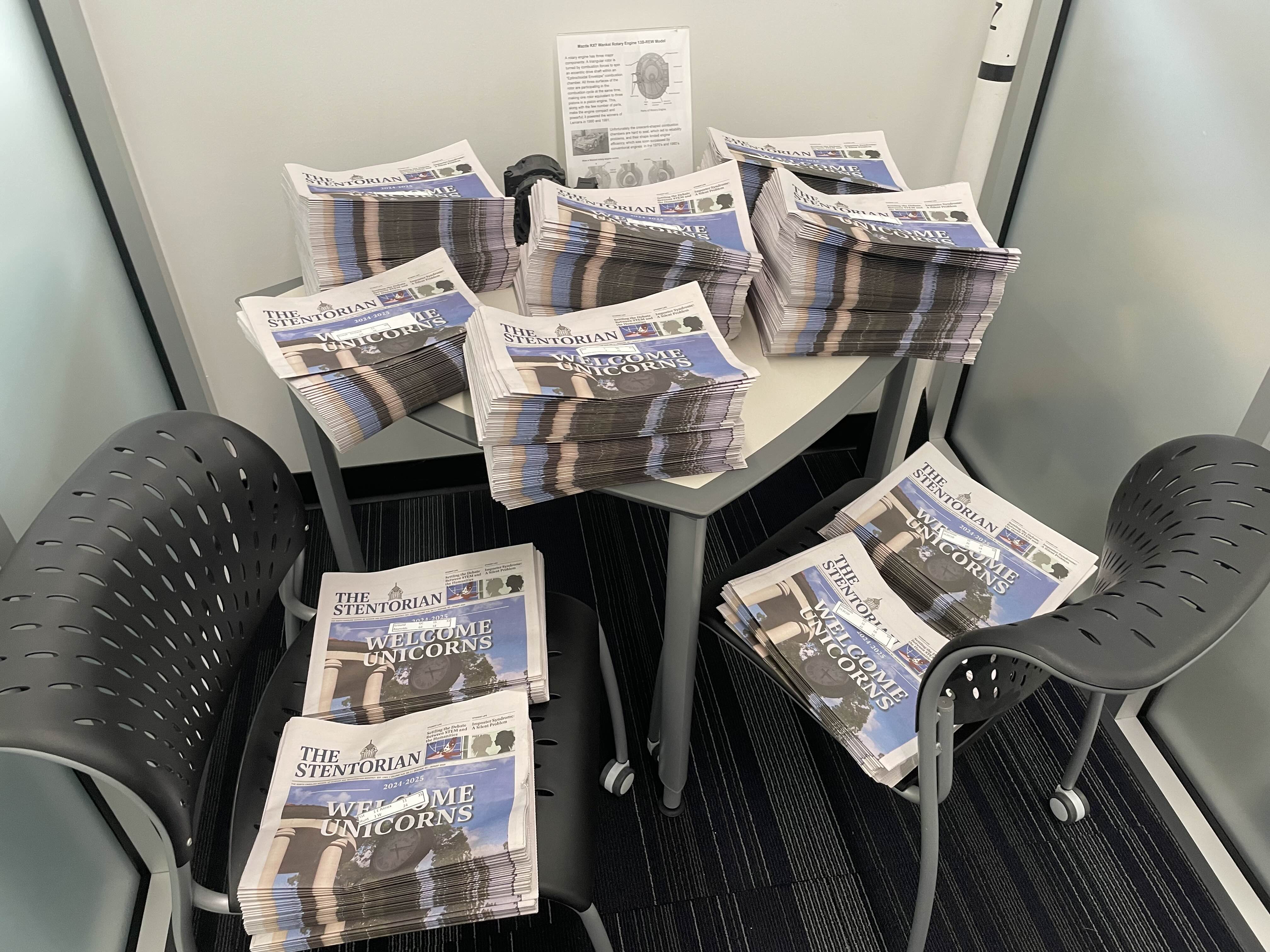
Within our school and local community, this year’s revival of the print Stentorian has garnered excitement, enthusiasm, and even a sense of unity.
We have incorporated interactive elements such as QR codes and our page of crosswords and custom puzzles to better engage students, then hooking them onto our other stories as well.
Business
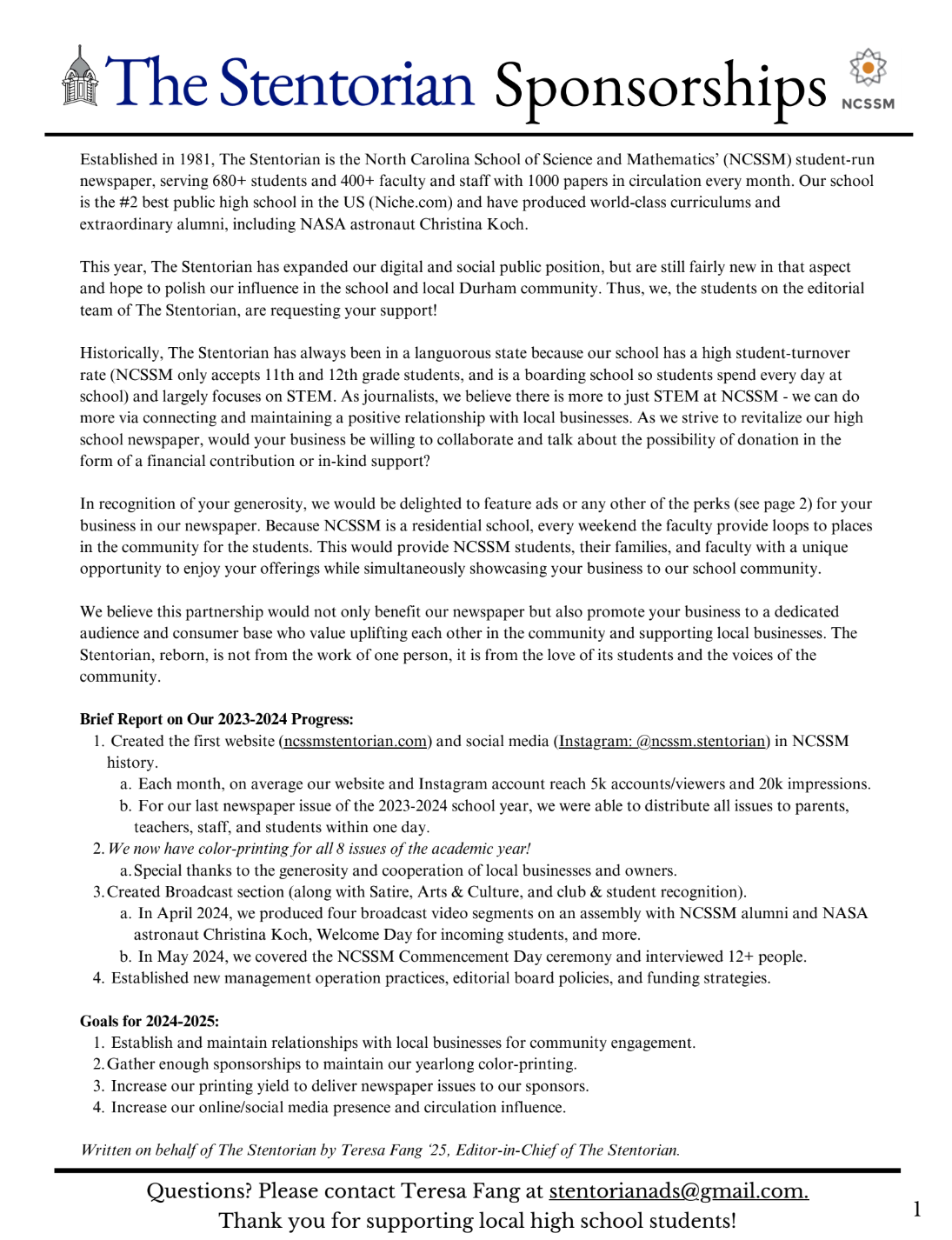
Our newspaper is normally funded by the school administration, from extra money left over from yearbook sales. This budget is strictly allotted for the newspaper’s monthly black-and-white 8 or 12-page issues. This means that in order to achieve my editorial board’s goal of getting color print in our newspaper this year, we need to accrue funding from outside public sources ourselves. Thus, every month, we send our editors (lead by me) to local businesses, delivering business proposals and pitches, handing out our Sponsorship Letters (below), and advocating for support for independent student journalism. So far in this school year, we have successfully made 4 issues with $1000+, all in color.
In August 2024, I created the Stentorian Editorial Policies and Operations Management Manual (EPOMM). This document was originally created to track our finances and business collaborations/advertisements, but expanded into the go-to FAQ for our editors and potential guest contributors. I made sure to include all necessary logistical details (approximate length, image size, credit formatting, etc) without limiting the content of work, as well as rules on everything from editorial processes, business models, website and social media guidelines, and more.
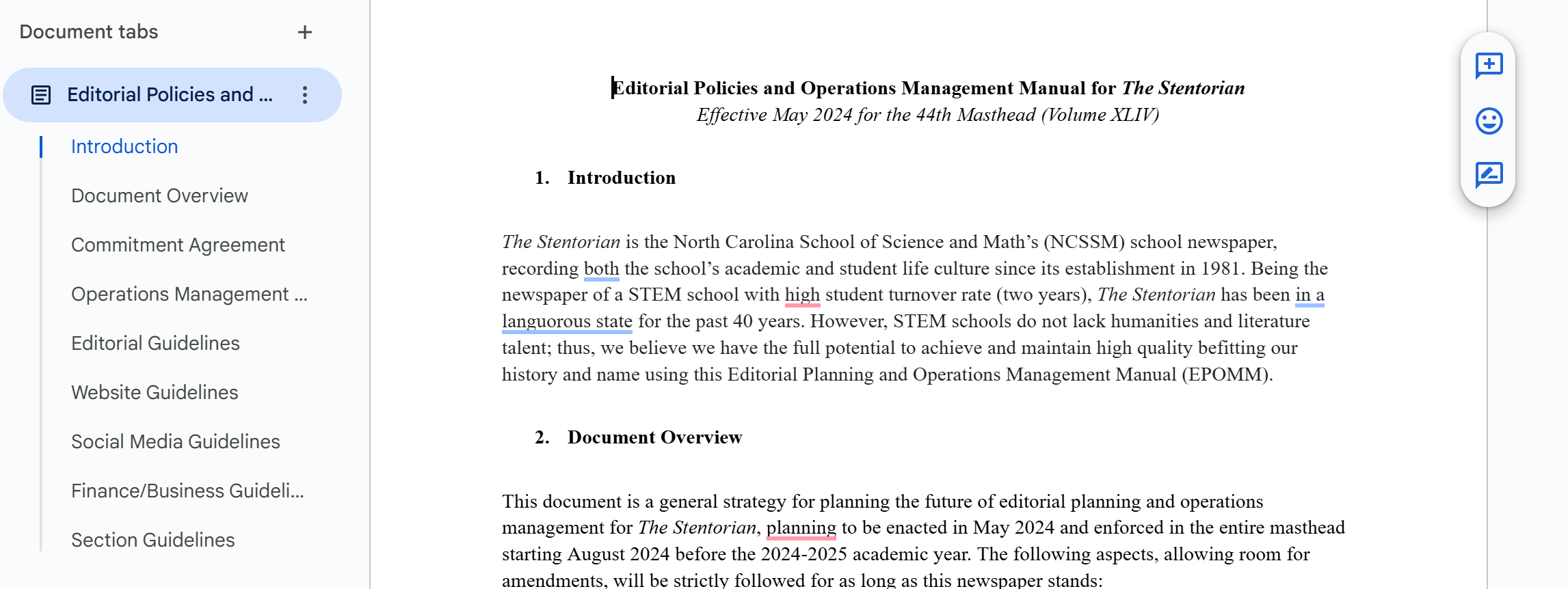
In the same month, after my editorial board and I reviewed the document thoroughly over a series of in-person and virtual team meetings, I added these policies in a readable form on the submissions page of our newspaper website.
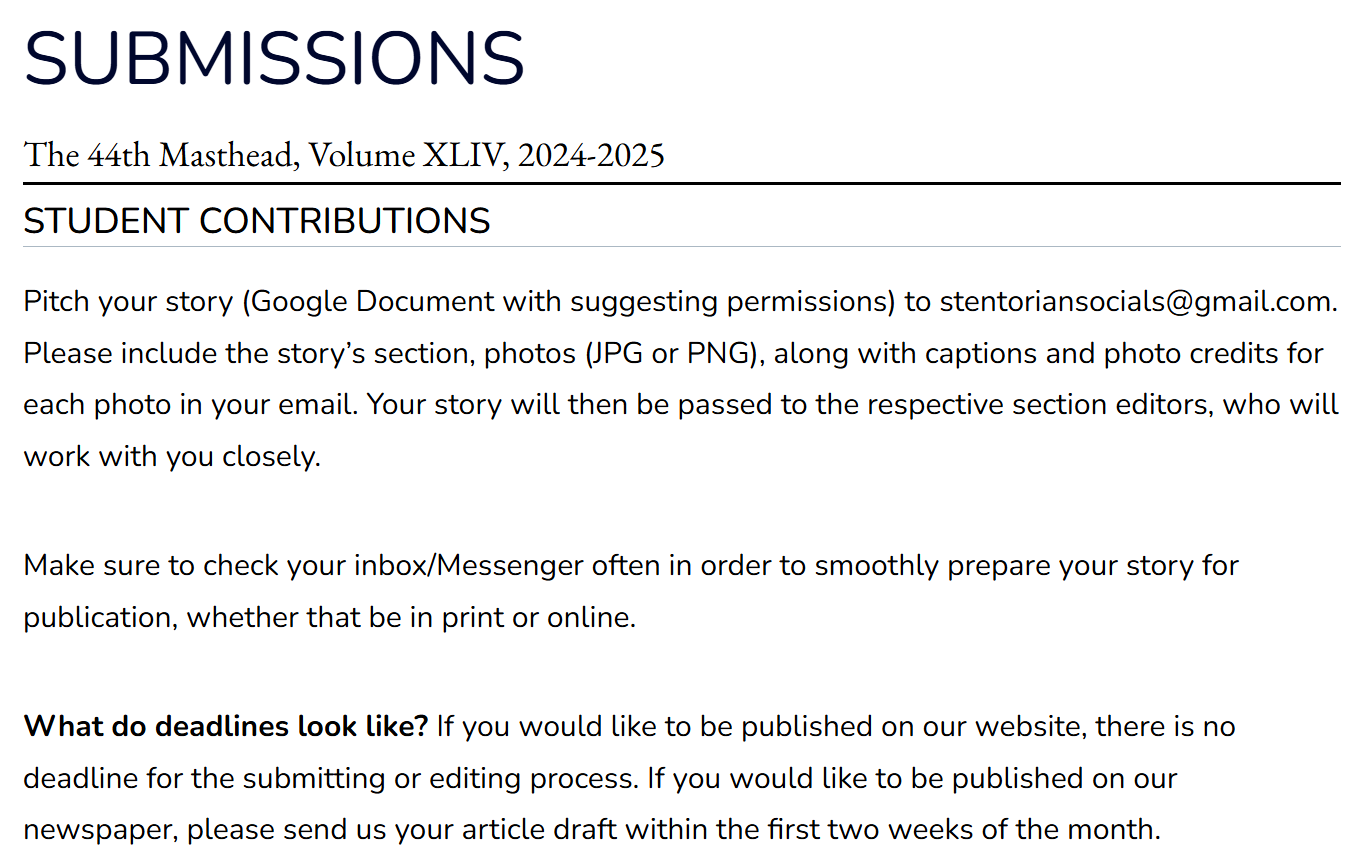

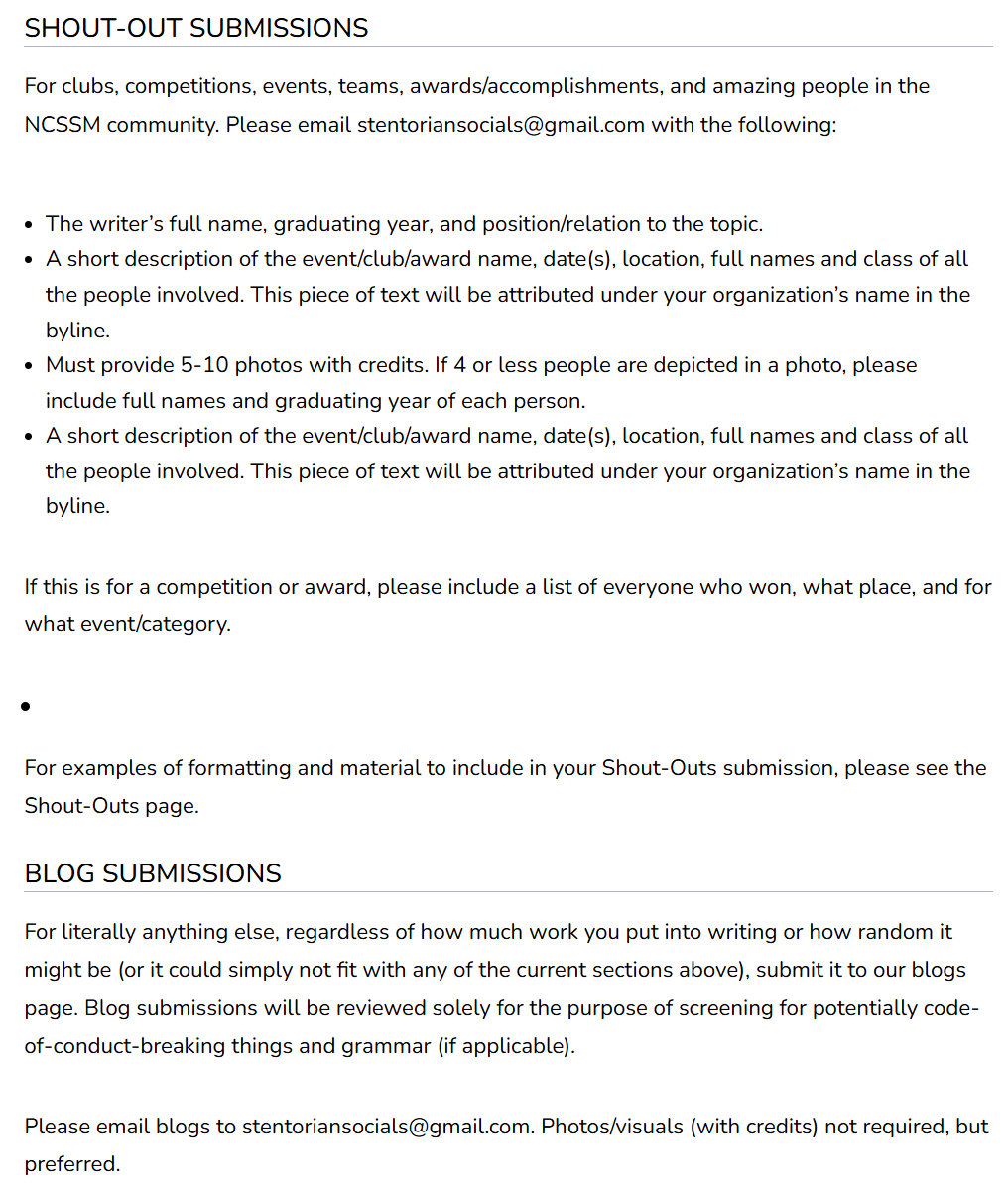
I was also able to appropriately flesh out and establish Sponsorship Guidelines, which details different tiers of packages in exchange for running advertisements on our print newspaper and website in set durations of time. I created this from start to finish based on my prior experience as an intern at Chapel Hill Magazine, and my current experience in economics and finance courses.
Me and some other editors were able to move onto the campus of our boarding school one week earlier than the other students, so the majority of this time was spent outdoors, walking through the then-rainstorms to pitch our partnership ventures to local businesses. In two weeks, we were able to secure $1000 from 4 different small businesses to support the first-ever colorprinted editions of our newspaper in school history.
As for the specific ads we get, usually the businesses just provide us with marketing materials, namely different types of logos. We are fortunate to be entrusted with these materials to create ads representing their businesses. This is also one of my responsibilities: I manually design and digitally create these ads to be printed in black-and-white or in color depending on the package a businessowner agrees to support us with.
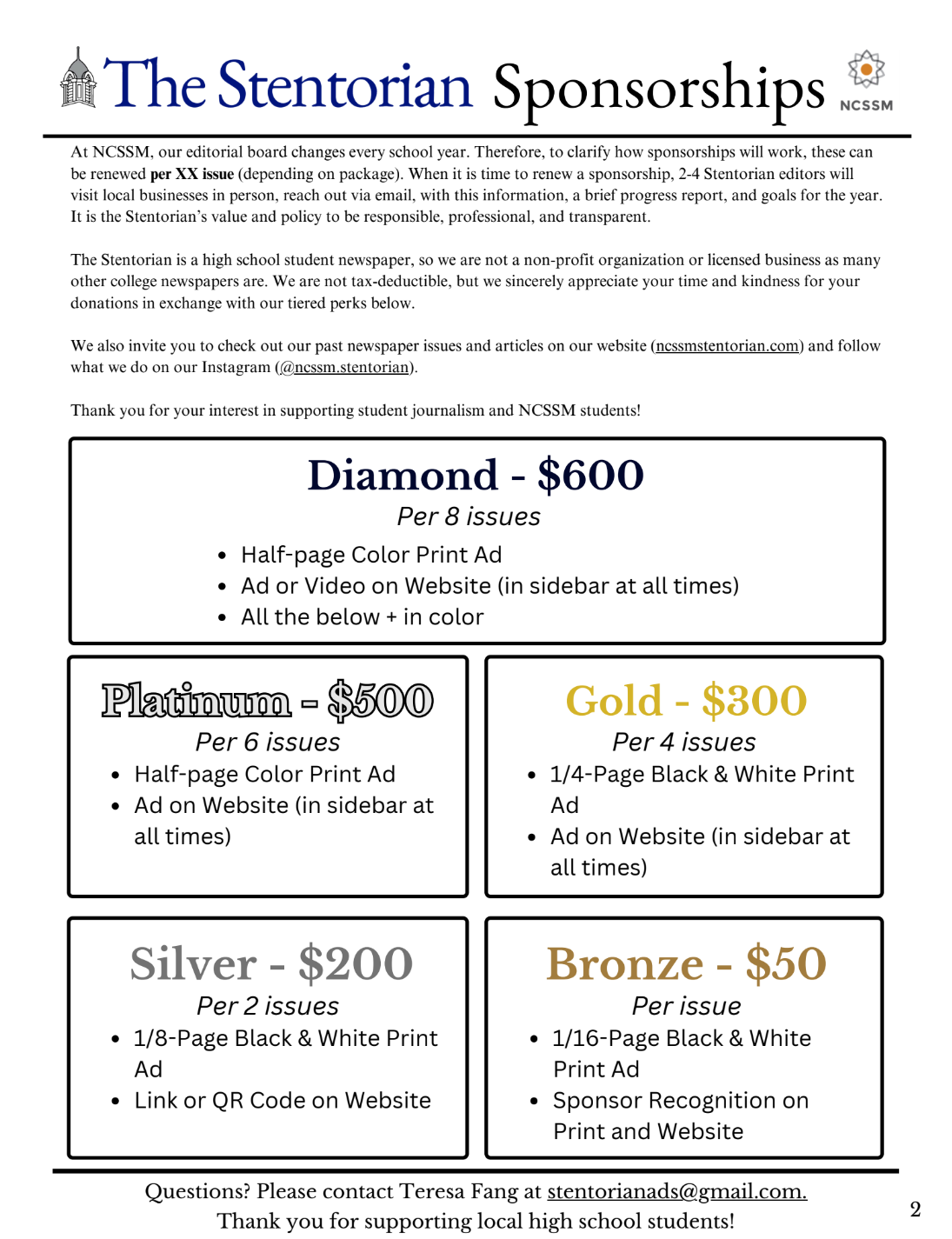
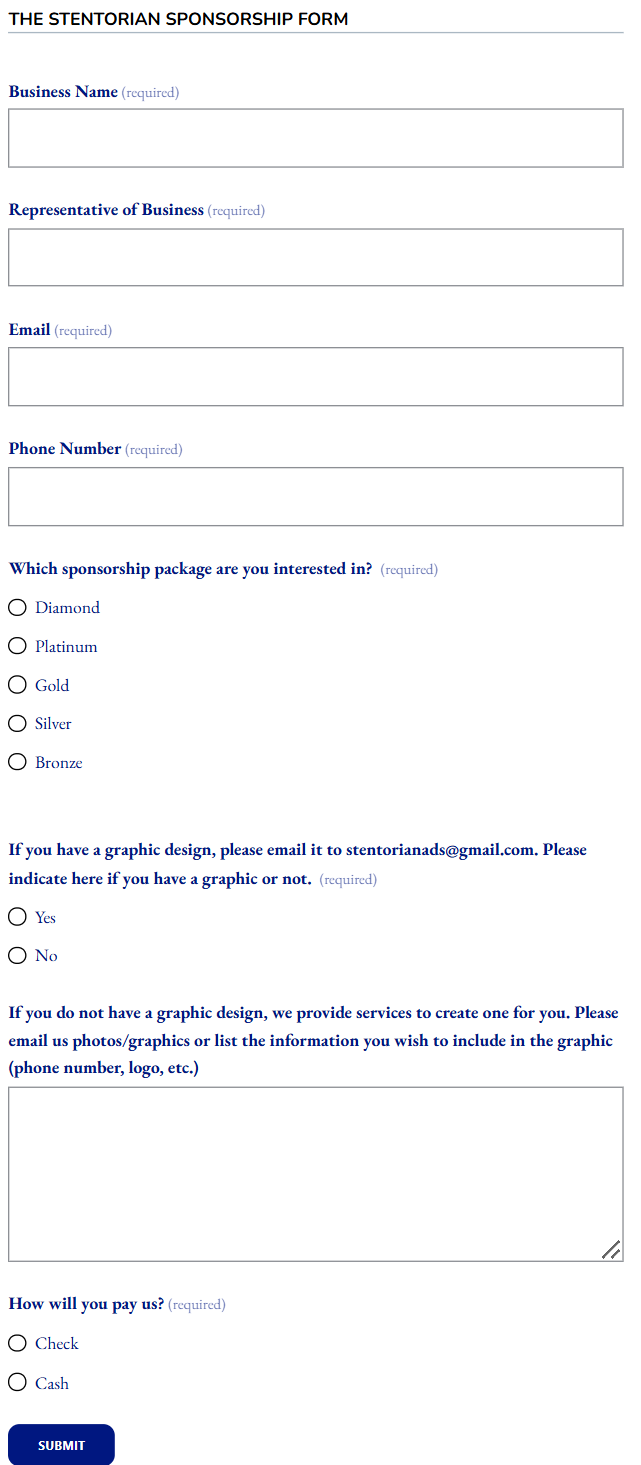
In November 2024, I revised our newspaper website and built a new page for advertising (above, right) in order to increase accessibility for sponsors to indicate their interest in collaborating with us.
 Teresa Fang