Editing, Leadership and Team Building
Preface / Teaching as Journalism Instructor
At the North Carolina School of Science and Mathematics, I am one of the instructors for a special course called SEM0414 Newspaper Forum. I got this opportunity because I am editor-in-chief of the student newspaper. SEM0414 is a weekly 1-hour course that spans 15-weeks (1 whole semester) and has around 12 students. I have full control over the curriculum and assignments, so as part of my goal to revitalize and modernize our 40-year-old newspaper, I created a new curriculum and new assignments to be taught. These materials can be viewed in this Google Drive folder.
To me, this was not only a responsibility entrusted to me by way of my editor-in-chief position, but also an opportunity for myself to grow as a mentor and opportunity for aspiring journalists at my school. This course also serves as a bootcamp for underclassmen who wish to join The Stentorian’s editorial board and get familiar with the editing rules, operation management, editorial policies, journalistic integrity and etiquette at NCSSM, etc. It is also open to anybody in the general community, who may not be registered for the class but still wish to audit and attend our courses.
The units include:
- Introduction to journalism and storytelling
- News & features
- Visual storytelling
- Opining
- Media literacy
- Broadcast journalism
- and more.
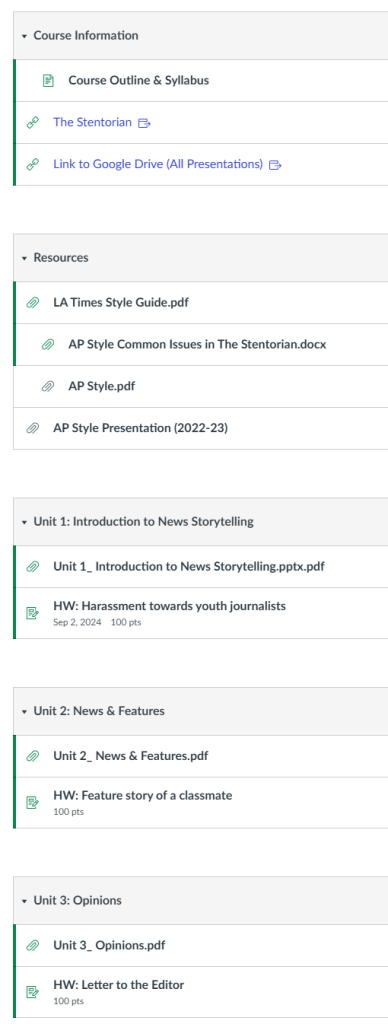
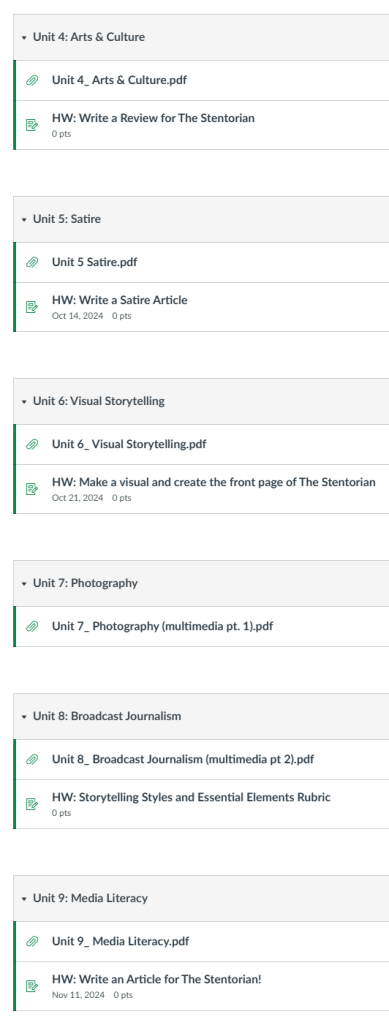
This is the Canvas course I created, including the 9 modules and resources I created for this course.
These materials are a combination of general journalism rules I’ve personally experienced or was taught and Stentorian-specific rules, such as the requirements for an opinion story pitch or what counts as different genres of journalistic writing for the sake of publishing online or in print.
To me, I am honored to impart my journalism experience to students who want to become journalists, but don’t have as much prior experience in the field. I believe the first step in a goal is to find meaningful and reliable connections in the direction you want to go, so hopefully this course was able to give my students a nice swim in the deep waters of journalism.
Editing
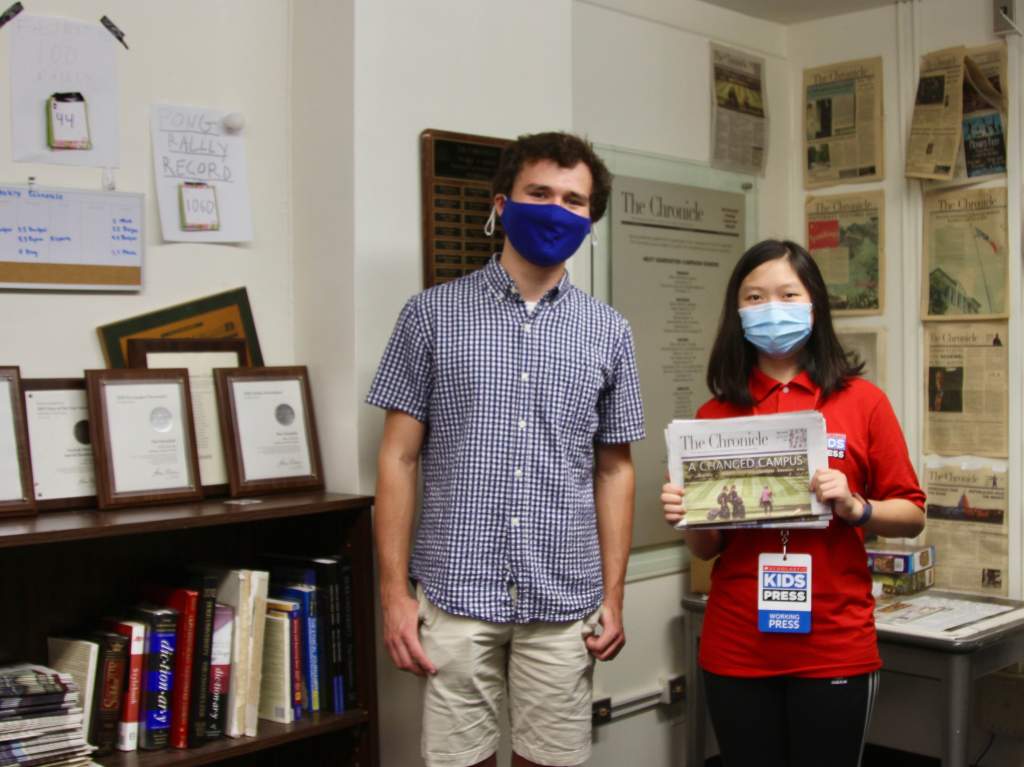
As a philosophy, I believe meaningful impact is created from trust, reliability, and clarity between myself and my team. From working with my editor-in-chief as a Scholastic Kid Reporter for three years to learning from others as an intern at the local magazine office, seeing what each team member brings to the table has always been one of my favorite parts of journalism. When it became my turn to serve as editor-in-chief of my student newspaper, it was more than an extra position to me but a responsibility entrusted to me by my teachers and classmates.
For the school newspaper at my old high school (freshman and sophomore year), I was a column writer and pitched as many stories as I could. For The Stentorian at NCSSM, I have had experience being the multimedia, social media manager, website creator, newspaper distributor, and attended all the weekly editorial board meetings in junior year—I have made my fair share of gauging the position of the newspaper and formulating ideas on how to grow our paper even more. Whenever I had an idea, I’d contact the newspaper advisor and the editors-in-chief and chat with them in person or over email.
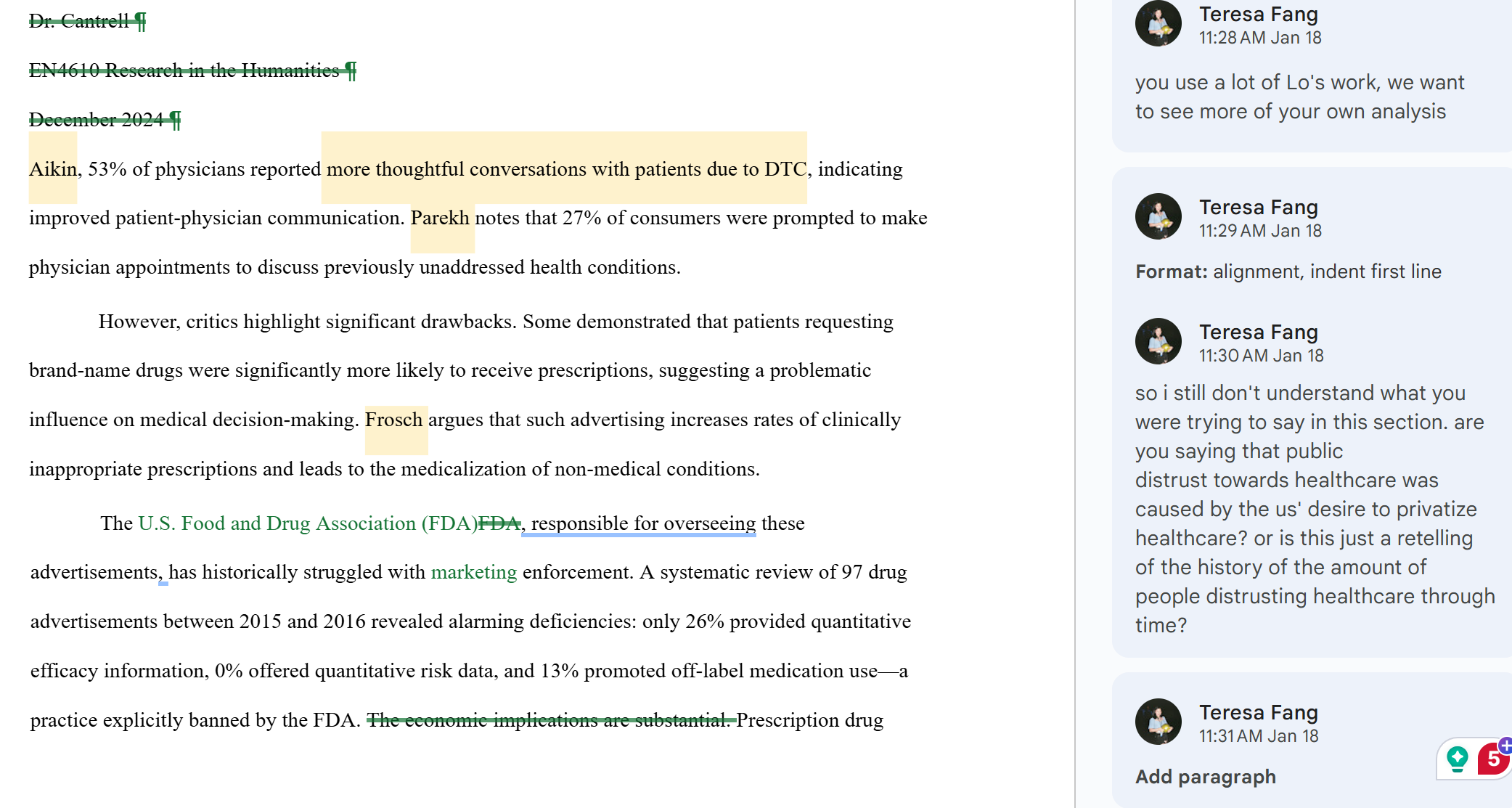
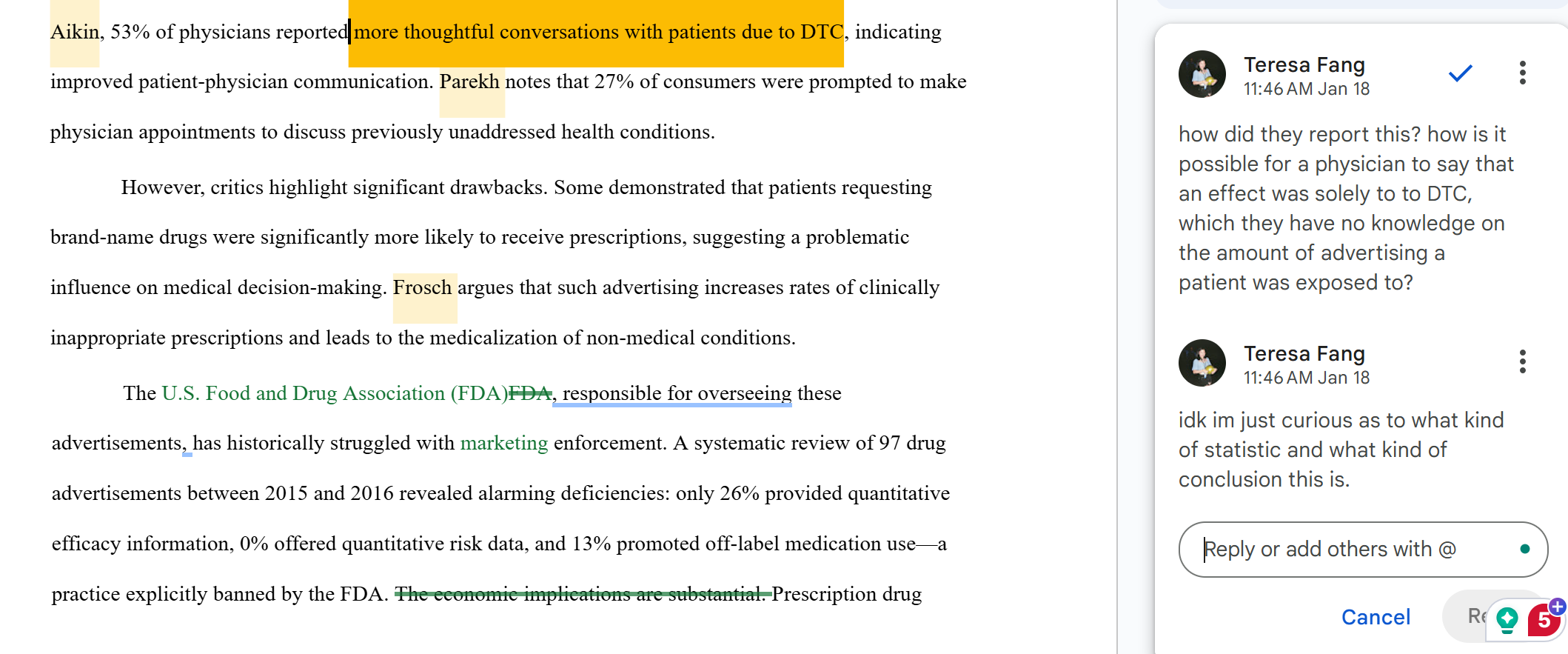
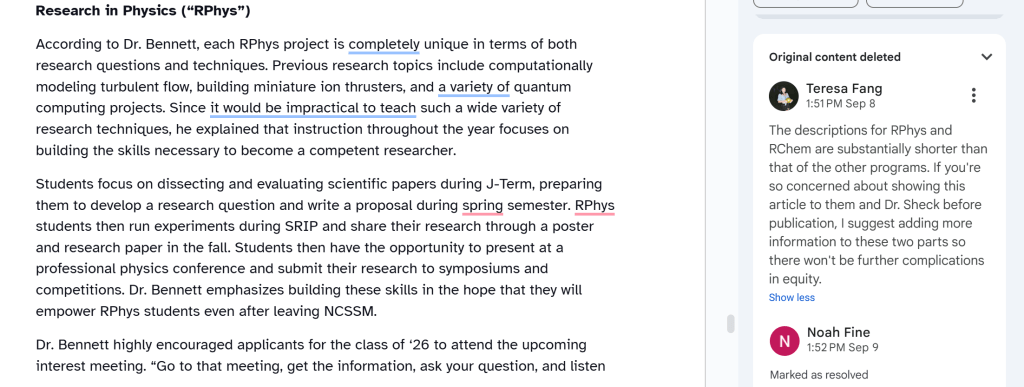
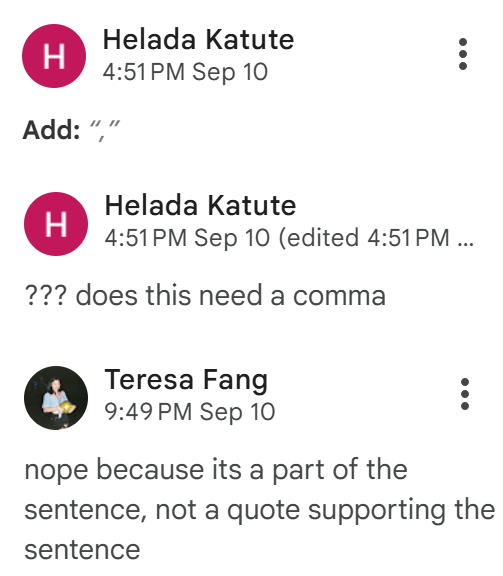
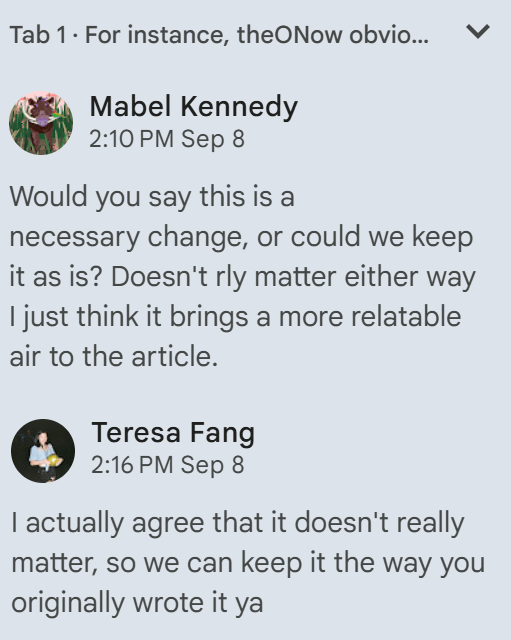
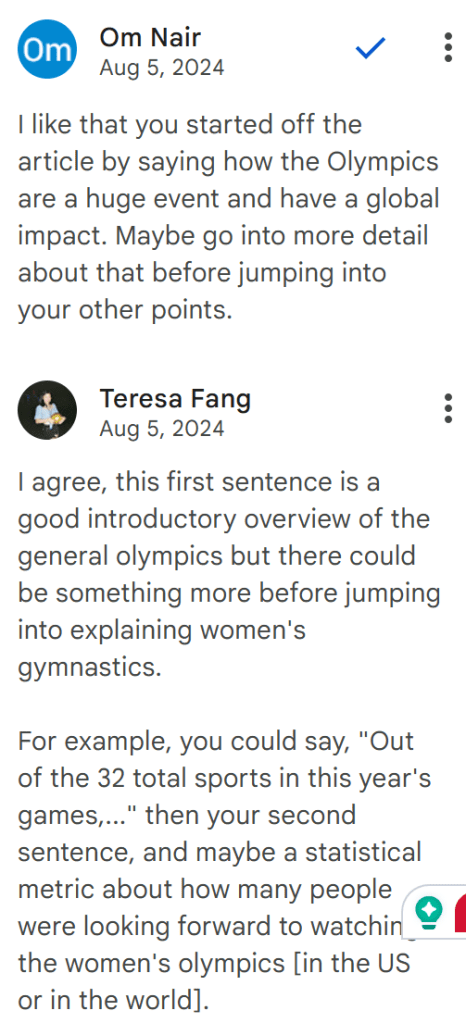
Now, as the editor-in-chief, one mantra that influences my revisions and suggestions for my writers lies in the word “reinspection and evidence.” From reading articles in the very first volume of The Stentorian to what I revise now, I notice the influx of opinion articles, which is good because that signifies that NCSSM students are receptive to their political, economic, cultural, and social surroundings. But in that opining, sometimes the evidence can be hard to communicate against the writers’ arguments and claims. One strategy I’ve found effective is commenting on specific parts of articles and responding with questions. This serves as a direct form of feedback to the writer, as well as give guidance as to what to do next, whether that be adding more research to support the claim or using more subjective/objective language when appropriate. I found this strategy to be very effective, as just giving general advice can be interpreted differently by each writer.
I also pay heavy attention to titles and headlines. From JCamp, I learned how to analyze a newspaper editorial layout/spread quickly (we had timed daily news quizzes on that day’s Washington Post newspaper, which required us to read quickly like retired grandpas at the breakfast table before the quiz), and one of the key strategies to getting a reader to pay attention to a specific article was in the words the headline used. Thus, I would always give suggestions on headlines (with multiple options/alternatives) to the writer after reading their piece properly.
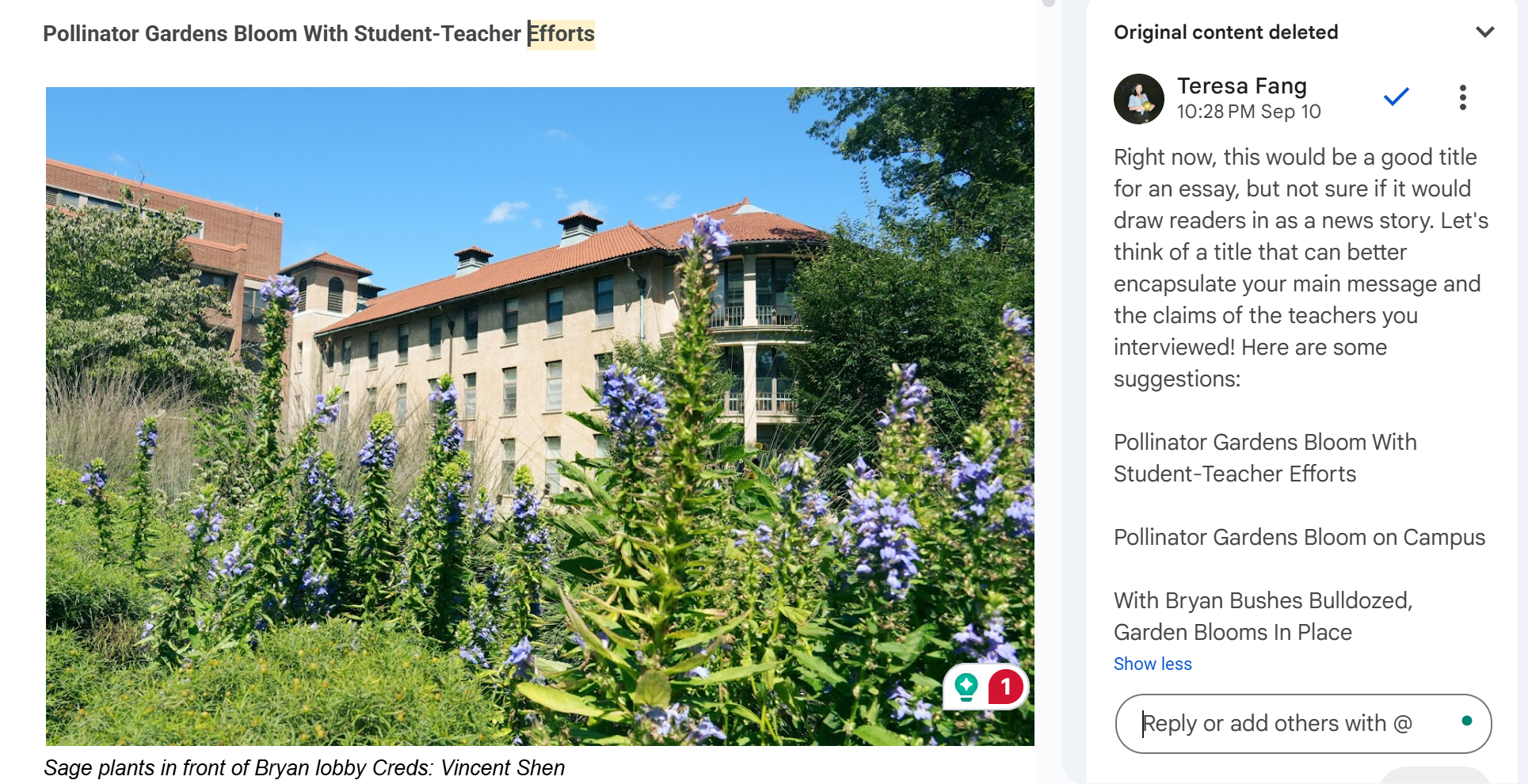
As a journalist with scientific and humanities research experience, I know the importance of using evidence to support claims, or anything that the writer includes in their story. As an editor, I identify claims in writers’ stories and factcheck them, especially for stories that mention government policies or politics.
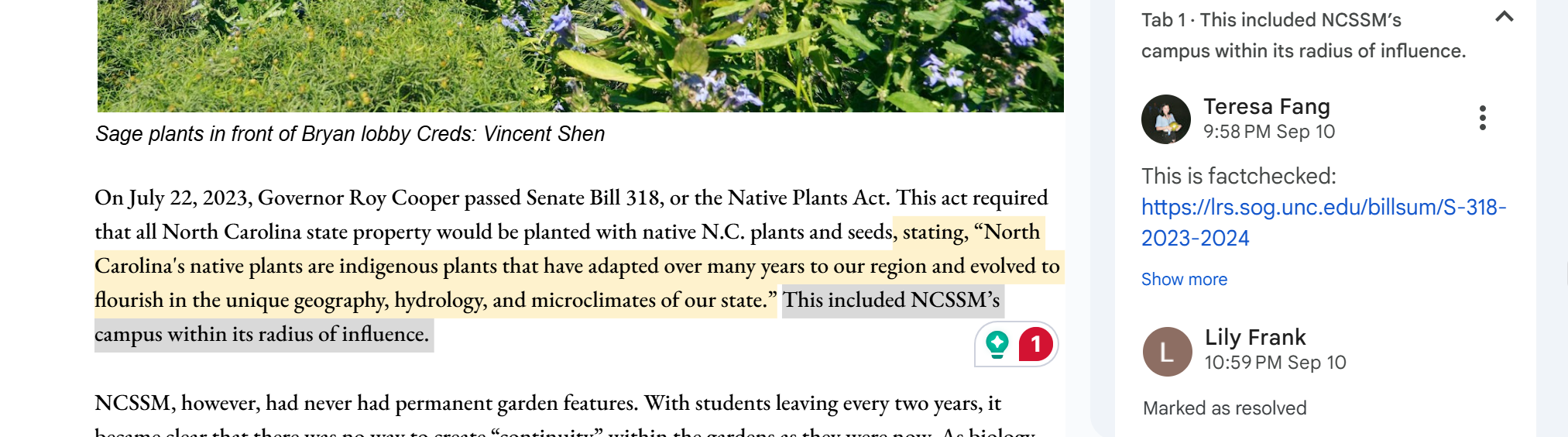
I’d also like to talk about the special conditions of being a writer at our STEM-focused high school. Many of our news, features, and opinion articles are about students’ science accomplishments, scientific opportunities like research programs, and quotes from teachers and students. Because our school has bureaucratic communication systems where every quote and claim has to be constantly factchecked, or at least approved to be said (by way of our newspaper not being an independent news source) by the teachers/administration repeatedly before the final publication.
Additionally, to maintain an unbiased coverage in our articles about people or groups of people, we try to maintain the same amount of writing for each group.

Another key area I focus on is advantageous use of quotes. I try to reserve quotes only for opinionated thoughts from a source, and put into the writers’ own words anything else fact-based. This strengthens the sources’ impact, and allows the writer to fact-check the other information.
On photos and crediting: it is our newspaper’s policy to have at least two photos per story, whether it is a news or satire article, at all times. This is for publication reasons, as multiple photos allows editors the freedom to choose what photos fit the writing best or are the most appropriate to be printed or featured on our website. Additionally, we also have a rule of having the writer add a caption per photo along with photo credits.
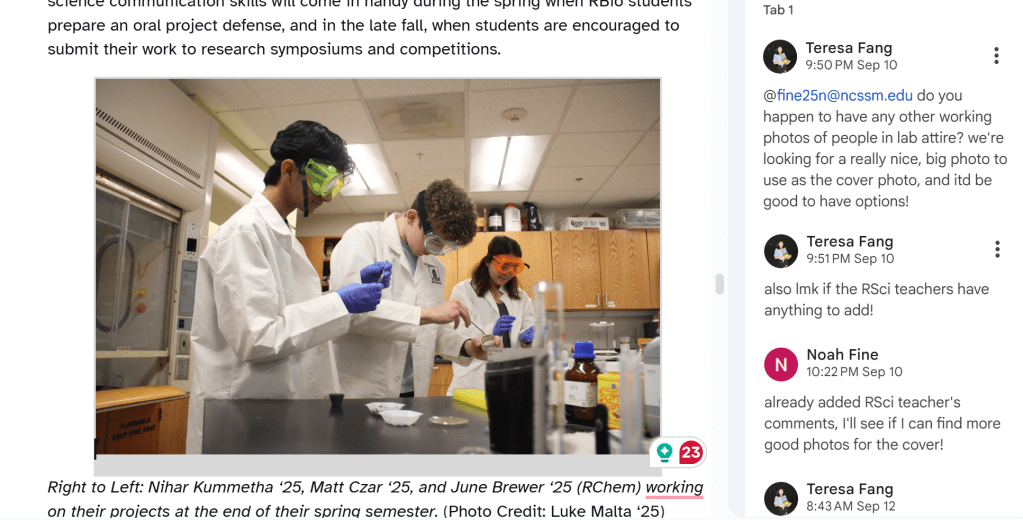
I established earlier in my senior year that our newspaper’s editing system requires at least two editors per article. Sometimes, we have underclassmen who do not have prior journalism experience nor a formal editor position in our editorial board to train their editing skills on articles. In my job as editor-in-chief, I also review other editors’ comments and respond to them appropriately. From my own past editors, I’ve learned that the editing eye and knowing the rules of the AP Stylebook is not an innate talent, but something that is to be practiced and trained. Editing is a peer process. The beauty of editing (and writing, evidently so) is that anybody can be great at it!
Leadership
On day one at my high school, I laid out my plans to the student body to revitalize our newspaper–over time for the past 40+ years, the readership had dwindled and the articles were too general. Many students didn’t know our school even had a newspaper. In the past, whenever the layout was reviewed by the school administrators, they expressed worry about our funds to print enough issues, or if anyone would read it at all.
My school, NCSSM, is an admissions-based STEM school, but this is not to say we lack humanities talent. There are plenty of stories to tell: our 680+ students form a jigsaw puzzle of cultures, identities, ideas, and stories from across the state. As the editor-in-chief, I believe in leading the editorial board to take advantage of this nature, adapt, and raise The Stentorian to new heights. We don’t just run the newspaper because we need one to boost NCSSM’s reputation as an elite institution; the school newspaper deserves the creative liberty and say in defining our school’s place identity.
To gain a better understanding of our student newspaper and how to develop a business model closer to functioning as an independent student newspaper, during my spring break in 2024, I contacted NCSSM alumni (’20) and current President of The Harvard Crimson, Sellers Hill, and went to tour The Crimson’s office on Plympton Street at Harvard University. Not only did this opportunity serve as a chat over coffee about newspaper operations and business models, but also to interview Sellers for my feature story on tips on how to be a student journalist in college. To this day, I still use the special edition and normal edition of The Crimson that Sellers gave me as inspo for The Stentorian’s modern editorial layout/spread.
Our editorial board assembled quickly: our goal was to establish a powerful online and social public presence. We moved onto campus a week earlier than the other students and braved thunderstorms to deliver pitches to local businesses for sponsorships. We hold monthly editorial board meetings that are also open to the public and guest contributors. We created a system of production ladders, management operations, and editorial guidelines, making sure to define our DEI policies and a checklist of what types of stories make the cover, or “make the fold.” We write about what makes student life at NCSSM great, but also what we think could be improved.
Once we had our submissions guidelines and advertising policies published online and accessible to anyone, I was able to more professionally engage guest contributors and possible sponsors. I also constantly make sure to encourage all potential guest submissions/sponsors with a positive and open-minded attitude.
Journalism is a small but large world, and countless lives can change if we dare to do one small thing. I’m proud to lead my editorial board to accomplish many “firsts” in school history: the website, social media, broadcasting, business management, sponsorships, editorial layouts, and yearlong color-printing. I’m excited to elevate my student journalism at the newspaper of whatever my future college will be, as well as other tech and political reviews, journals, and publications.
Team Building
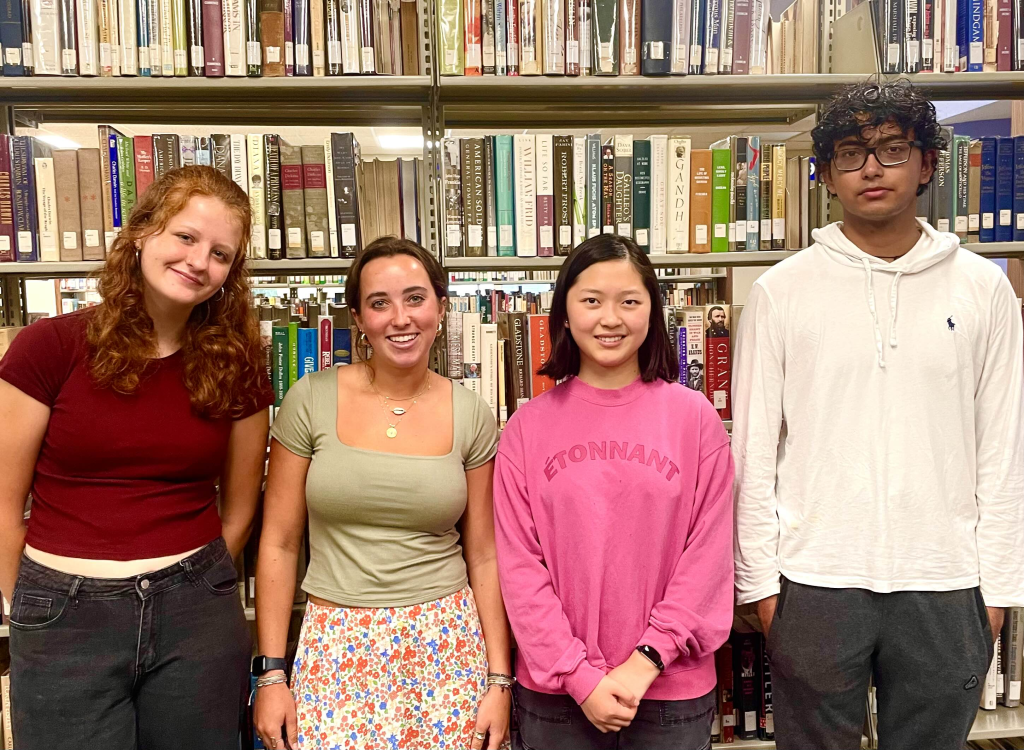
My goal from day one of arriving at NCSSM was to contribute my seven years of journalism experience to increasing interest in student journalism. As a graduating senior myself at a high school with just juniors and seniors, I have had to consider especially the staff-recruitment and legacy-building aspect of leadership. The quick student turnover of our school presents a challenge to many student organizations as to how to preserve and pass on the torch to our underclassmen. Of our small staff of 15 members, everyone is a senior. I attribute much of my confidence and experience in The Stentorian now to my time helping the editors-in-chief of last year (during my junior year) as the multimedia editor and frequent helper of distribution. Thus, I knew that if we wanted all the policies and progress we made this year to continue and succeed in the future, we needed to have an especially strong recruitment and training process for next year’s Stentorian staff.
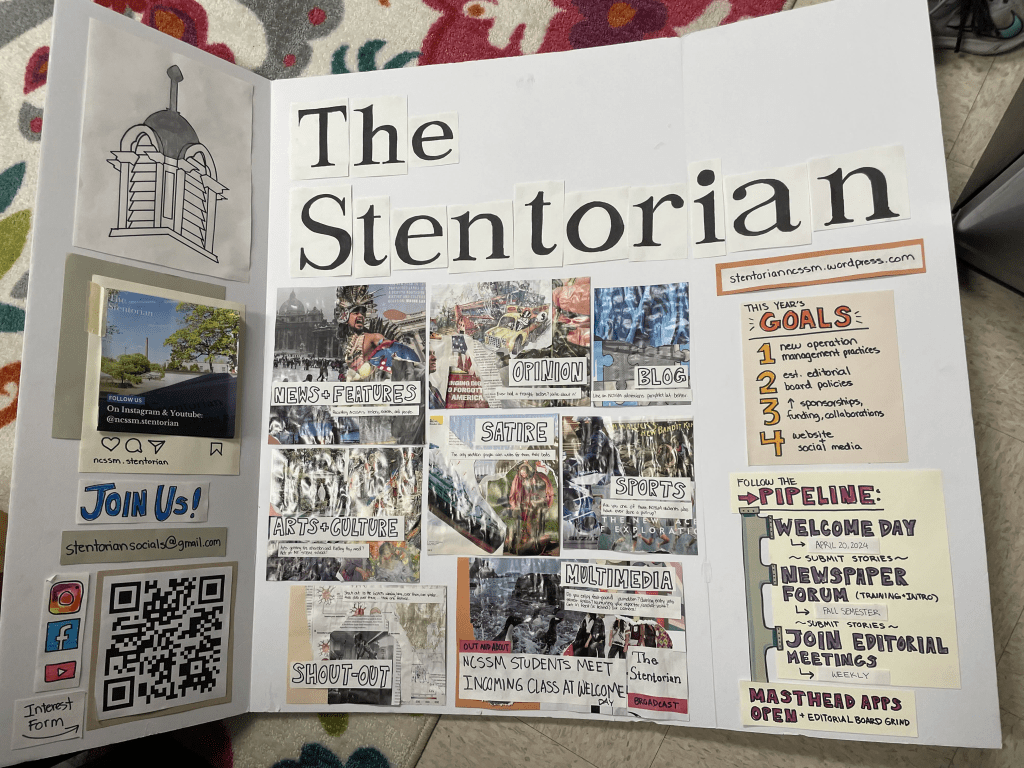
In my junior year, I underwent training/preparation to join the editorial board by shadowing the editors-in-chief as they worked on the newspaper, and in their bimonthly editorial meetings whenever I could. Whenever it was time to distribute the newspapers to the Assigned-female-at-birth residential halls, I would always race over to the office to grab a stack and distribute. During the annual Open House and Club Fair in Spring 2024, I created the trifold poster to promote the newspaper. This contributed greatly to the size of the current editorial board, as 15 members is an all-time high in school history. This was the first appearance of The Stentorian at a school event since 2020. Combined with the bootcamps offered during my journalism courses to juniors, hopefully aspiring student journalists won’t have many obstacles to operating The Stentorian after all the seniors graduate.
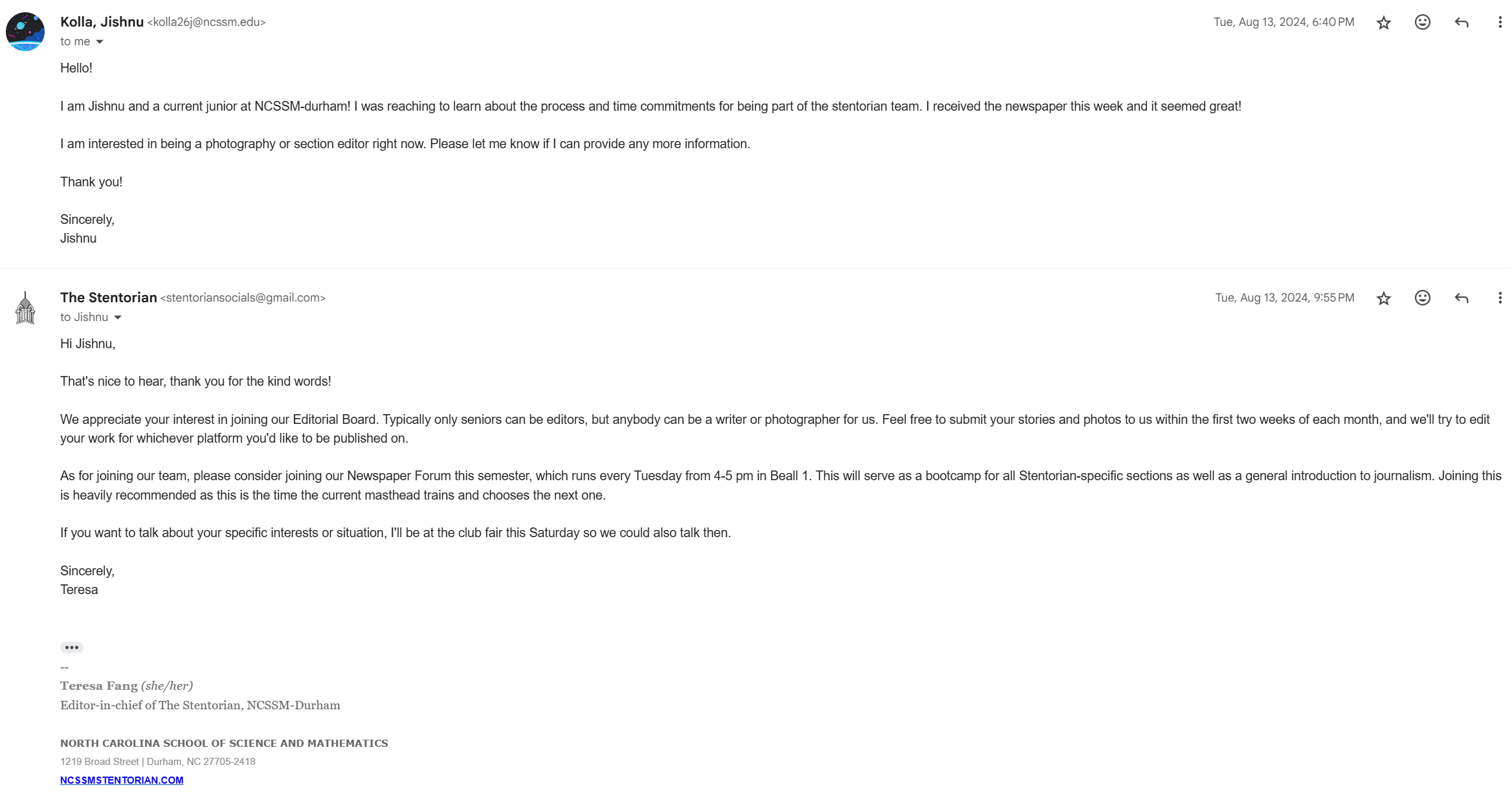
I always have four tabs open on my browser at all times: the inboxes of my personal Gmail, my school email, The Stentorian’s ad email, and The Stentorian’s general email. This allows me to respond to requests or inquiries immediately as per a journalist’s habit. Whenever I respond, I use cordial language and try to be as professional but friendly as possible, whether to other students or potential business sponsors.
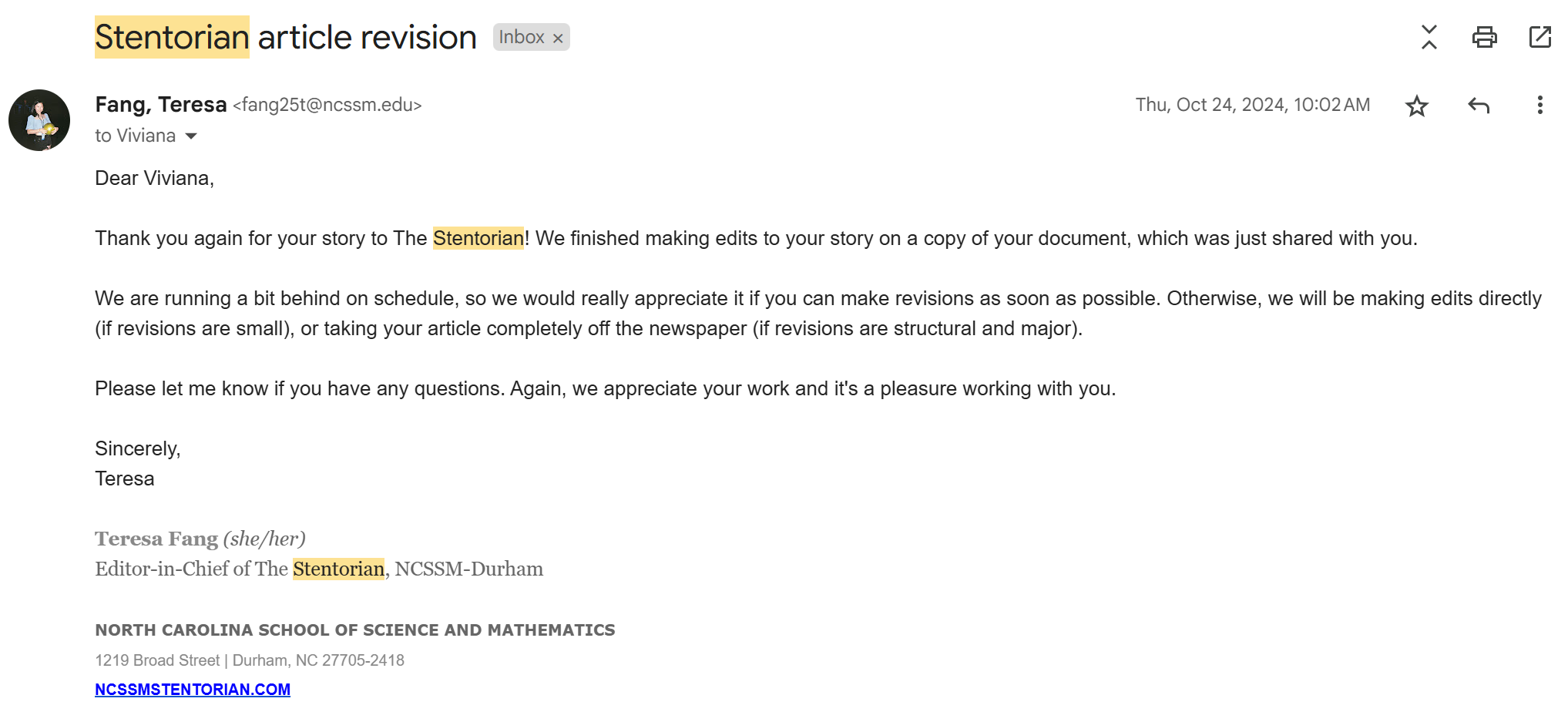

I’m excited to witness the current growth of The Stentorian’s editorial board, online presence, and schoolwide and community-wide influence. I cannot wait to surprise my underclassmen next year whenever I get the chance to come back to NCSSM from college!
Additional info about EPOMM
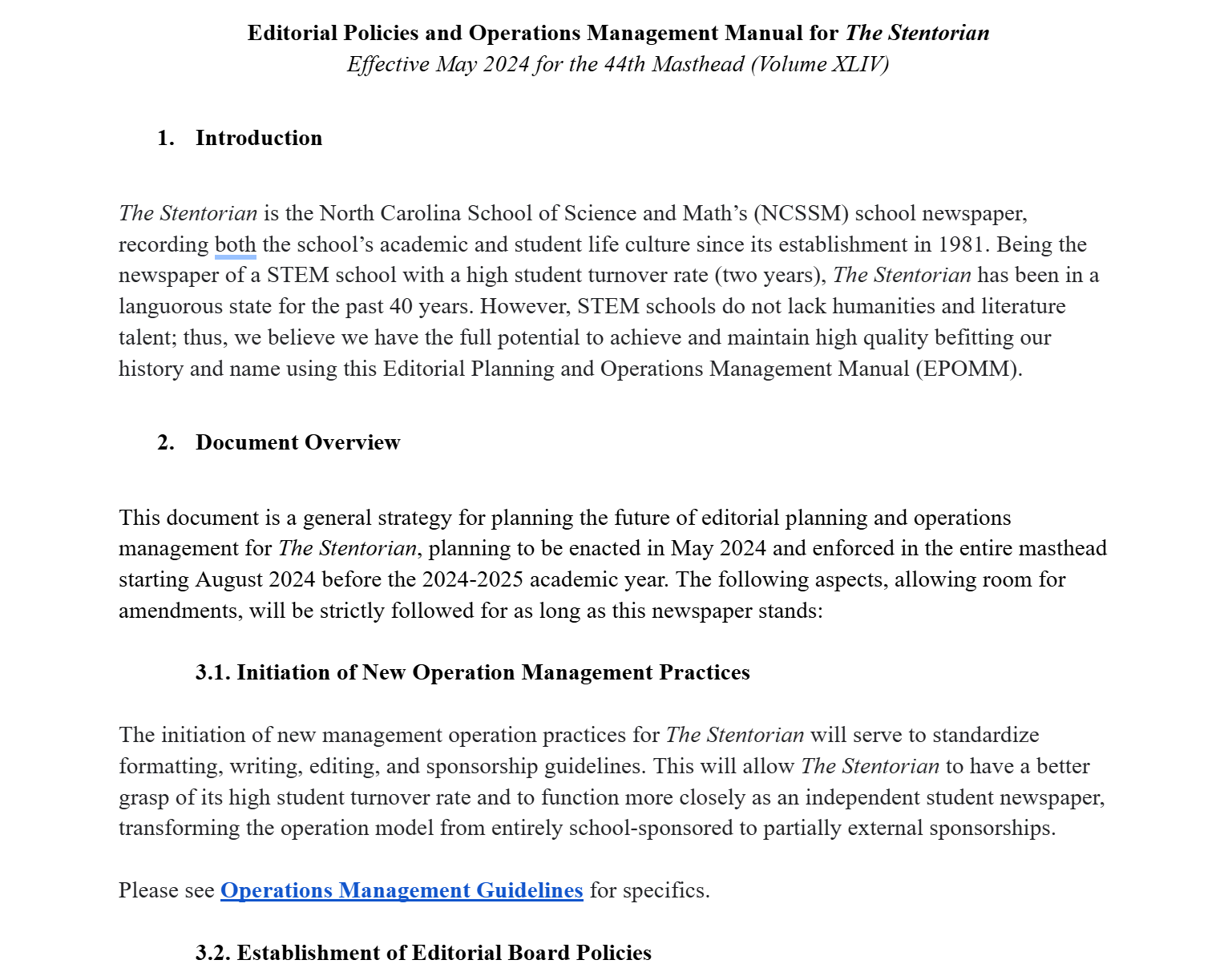
Before the 2023-2024 school year ended, I created goals for the new editorial board and presented them to the newspaper advisor and the team in our first meeting in May 2024. These ideas, suggestions, and goals are recorded in a lengthy document called the “Editorial Policies and Operations Management Manual (EPOMM),” which to this day has become the doctrine that the masthead follows in our internal, external, and editing and promotional operations.
Though described as “NCSSM’s student-run news source,” the Stentorian’s content has been nearly-all comprised of sporadic and random work, covering topics ranging from things heard in dorms or issues on the other side of the planet.
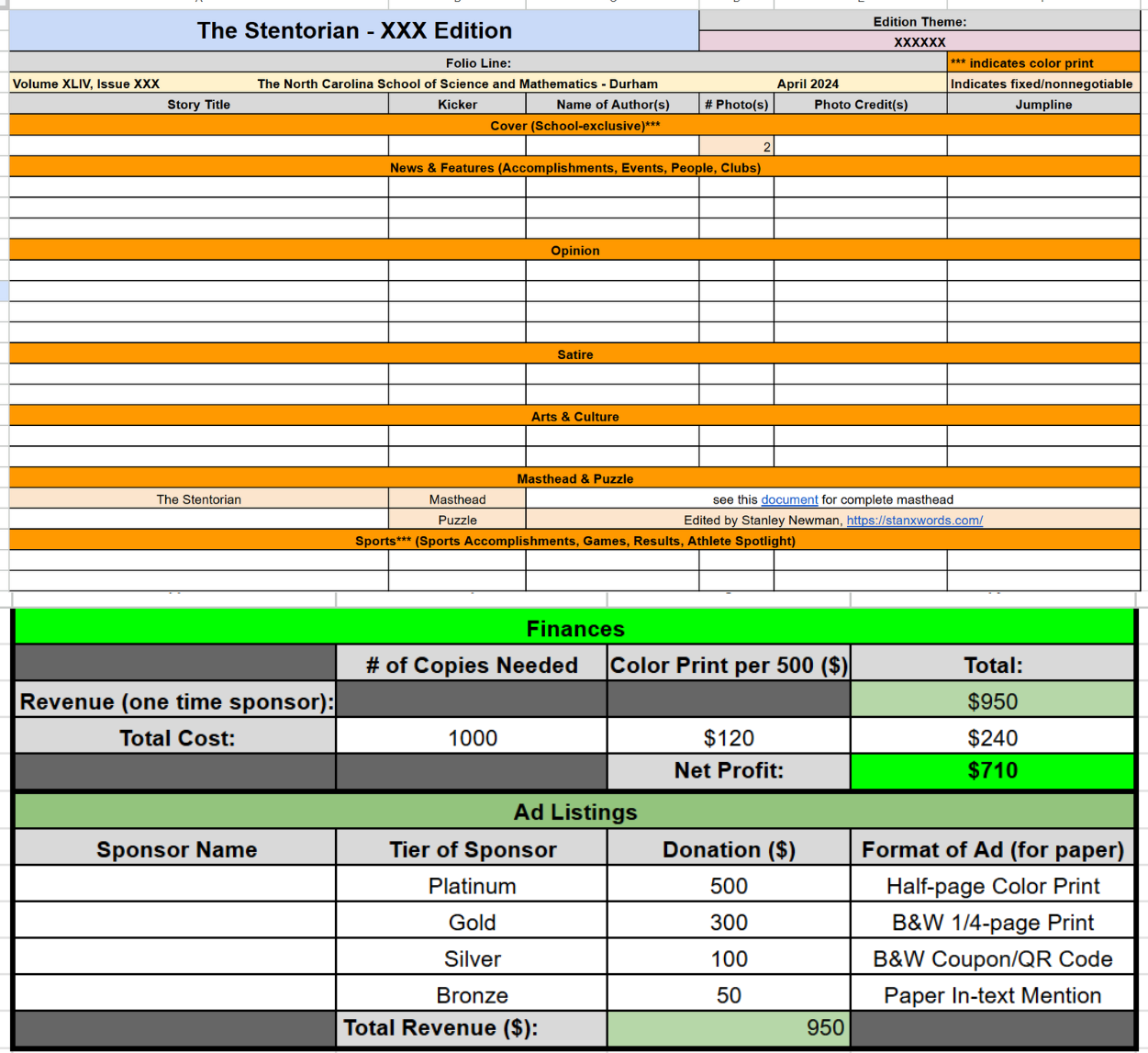
This year, we began to actively increase outreach toward the larger student body, even from the faculty, and welcome contributed work, in order to better represent the voices of all students. To do so, we also needed to set a formal policy to standardize such submissions. This policy is now in our EPOMM.
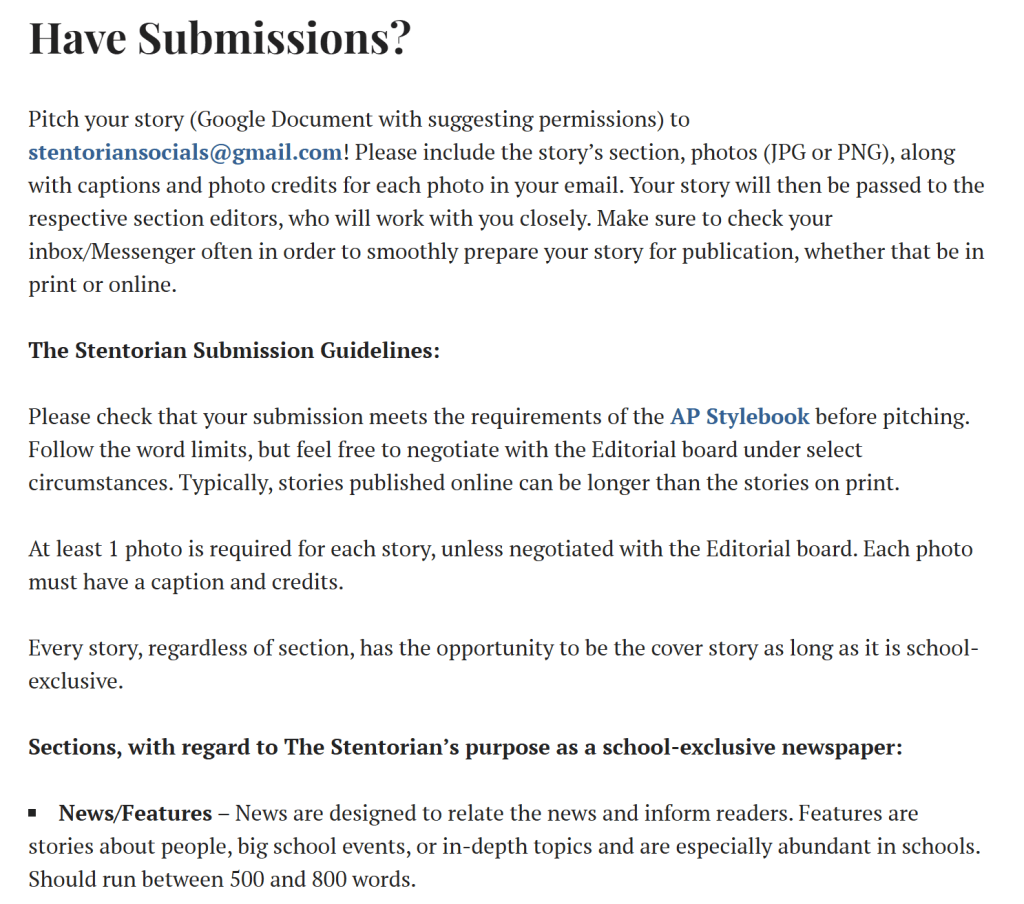
Another new feature detailed in the EPOMM is the new Production Ladder template (right) for the purpose of planning every article to be printed in an issue a month before the spread is sent to the press. It also has a revenue-calculating aspect for sponsorships and printing prices.
To write the EPOMM, I consulted NCSSM/Stentorian alumni in the journalism field. Most notably, Sellers Hill ’20, current student at Harvard University and the 151st President of The Harvard Crimson.
When I visited him at The Crimson’s office in February 2024, I updated him on the state of our paper and he gave me suggestions on growth, editing and design rules, and tips on how to get business sponsorships/funding. I also took the chance to interview and write a feature story about him. Now, Sellers is the Stentorian’s secondary newspaper advisor.
When I visited him at The Crimson’s office in February 2024, I updated him on the state of our paper and he gave me suggestions on growth, editing and design rules, and tips on how to get business sponsorships/funding. I also took the chance to interview and write a feature story about him. Now, Sellers is the Stentorian’s secondary newspaper advisor.
 Teresa Fang