Conducting Climate/Geoscience Research
When I was ten, my parents took me to a wetlands wildlife refuge. It was frighteningly cold, but the nature was beautiful; flocks of geese, ducks, and swans glided across aquamarine waters amidst golden-tipped swampgrass, and flew up and down in flocks together during dusk. The world is so beautiful, so big, and so blue; so many species live here and it was the first time I fell in love with this nature. After I wrote a story about this and shared it with Scholastic Inc., I was lucky to become a kid reporter and my journalism career started. My first published story was about the impact and humanitarian aid to neighborhoods severely damaged by Hurricane Florence in NC. Hence, I became aware of climate change and that humans must do something about it.
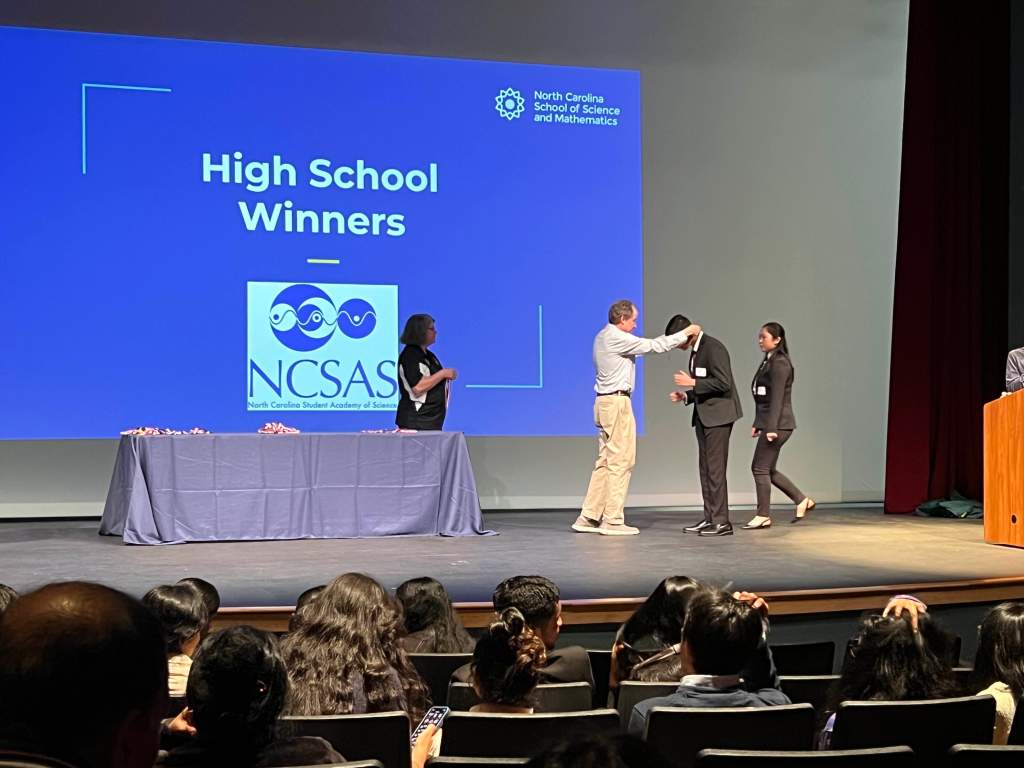
One day, I read an article in Scientific American about the impacts of glacier melting leading to sea-level rise, water cycle imbalances, and water availability. This article immediately perked my attention as I thought about my childhood beach disappearing. In high school, I started conducting environmental science research, aiming to create a dynamic climate model for sea level rise by using GPS technology. It has since then won regional and state awards, like the NOAA Taking the Pulse of the Planet award and the Association of Women Geoscientists Excellence Award, at science fairs (e.g. North Carolina Science and Engineering Fair (NCSEF) and the North Carolina Student Academy of Science (NCSAS)) and presented at high-school and national undergraduate conferences (e.g. Annual Biomedical Research Conference for Minoritized Scientists (ABRCMS) hosted by the American Society for Microbiology). Now, besides caring for nature as a journalist, I have another identity as a researcher fighting to directly impact climate change.
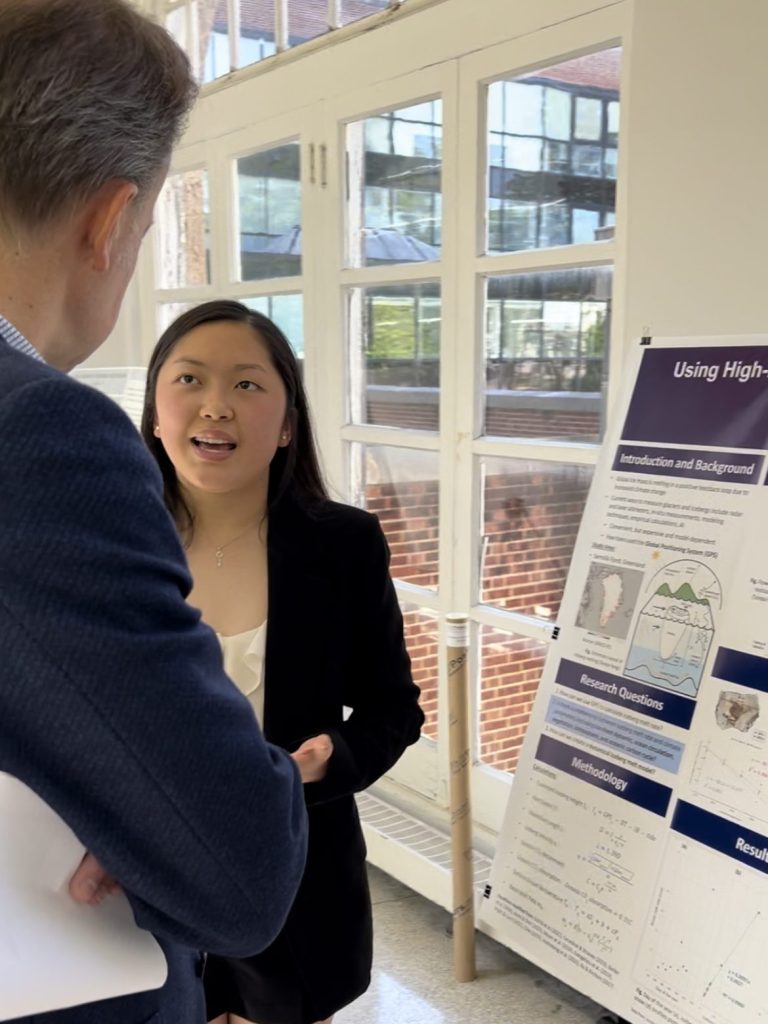
From these experiences, I can conclude that in order to make positive change in a large issue, people must work together to drive action, not just speaking out. At my current high school, students are fighting every day to make positive change through research. I believe that young people CAN drive solutions.
That’s why I created my film, “Earth Proof: Young People Save The Earth,” to highlight the efforts and importance of young people conducting climate research.
For more details on specific research I’ve done, visit Research.
Environmental Advocacy Through Civics (Chapel Hill Youth Council and Planning Commission)
Every small drop of water leads to the great ocean. Although most youth are not of the age to vote yet, I believe there are other important ways to contribute to local civics.
For the past three years, as the president of the Chapel Hill Youth Council and the youth liaison to the Town of Chapel Hill Planning Commission, I have first-hand experience engaging with urban planning developments and land use management in my hometown— one of the hottest and ongoing topics is how to modernize while maintaining our historical small-town, natural vibe. While our population is increasing faster every year, the local government and residents need to increasingly work together to balance constructing new, taller, and denser buildings with existing concerns including native tree preservation, stormwater buffering and flooding, and excessive parking lots and road width.
On this discussion, to decrease carbon dioxide emissions I suggested to a new apartment development to decrease the number of roads and add more bike lanes and public spaces as the youth representative, and the next time I heard their revised presentation, the development really did take out the asphalt roads and added bike lanes, public spaces, and greenery — in doing so, I feel proud contributing a little to my town. Before, I had been using my skillset/experiences to organize events to connect young people with the local government to let any and all voices be heard, but I am always up to advance this effort by implementing an actual initiative young people and people of any age can contribute directly to voice their thoughts on important decisions that impact the environment in Chapel Hill.
Town of Chapel Hill Parks & Recreation
In April 2020, I started to volunteer at a long-term Town of Chapel Hill Parks & Recreation project where every month, community members come together to clean up Booker Creek, a trail in Chapel Hill. Our jobs were mainly to cut down invasive privet in the woods, make a big pile of privet along the side of trails for truck pick-up, collect litter, and plant native tree saplings. By this time, these four years of volunteering have really made me an eagle-eyed privet chopper.
When I first started volunteering, I wrote a story about this project as a reporter for Scholastic Kids Press, featuring the lead organizer Jeanette Bench and my younger brother, who comes to volunteer with me sometimes. Jeanette remembers me from back then and never fails to ask me how I’m doing every month I go to volunteer.
Over the years, I witnessed this project gather new faces (including my friends, who I pulled in to help) and move to different creeks after one trail was finished. Now, we have moved from Booker Creek to Bolin Creek and the surrounding forest and residential neighborhoods.
Orange County Animal Shelter
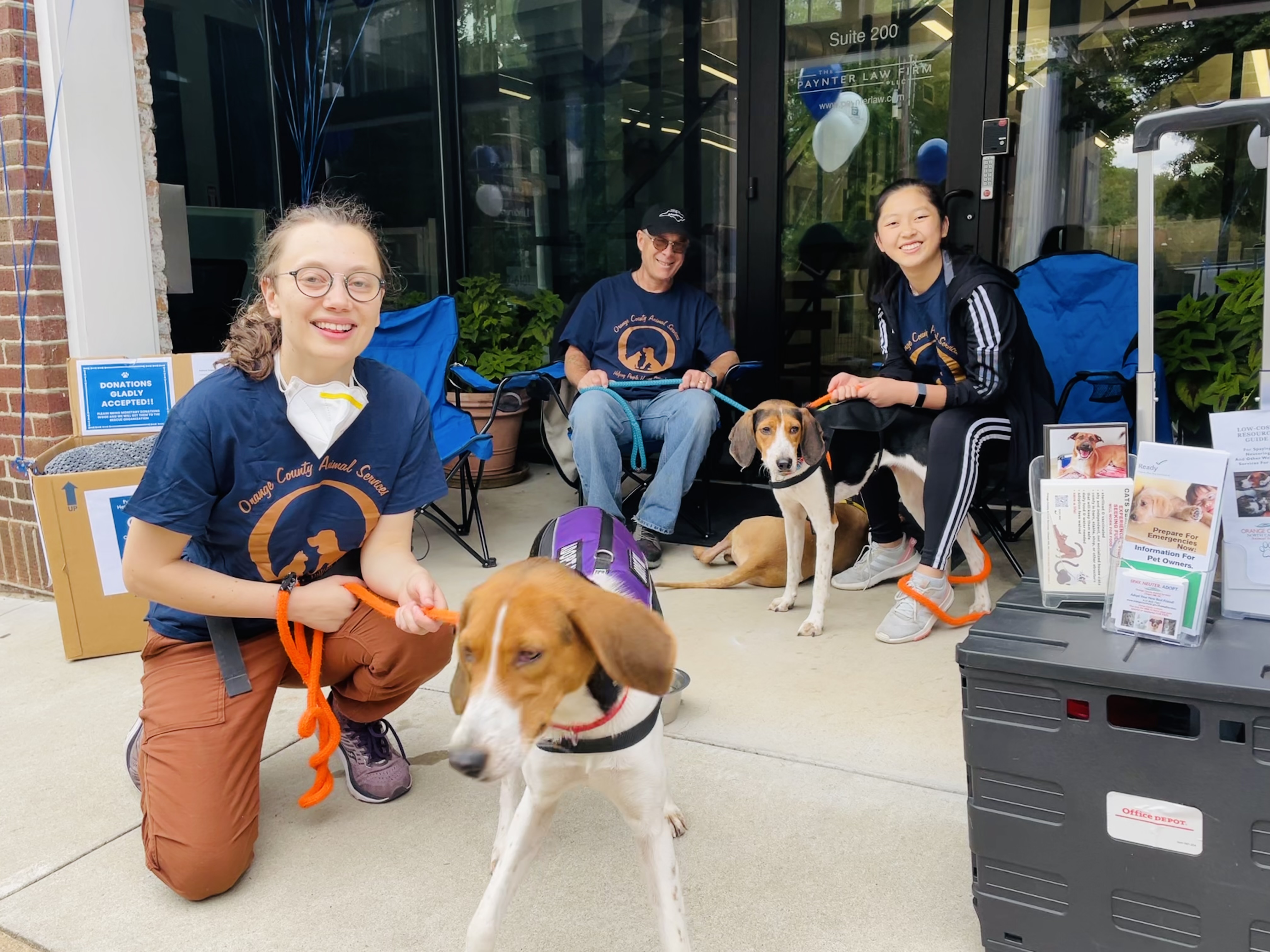
After undergoing the basic training procedures, I started to volunteer at my local animal shelter in June 2022. Every weekend I took the adoptable shelter dogs on morning and noon walks around the building and on trails and socializing with the adoptable cats and kittens.
Soon, I became a special events volunteer, transporting and handling dogs and being responsible for adoption papers at adoption events at businesses, medical centers, and cafes in the NC piedmont region.
Habitat for Humanity
As a volunteer, I helped build houses, paint fences, and prepare gardens and lawns in Orange County, NC.
Chapel Hill Public Library
Since August 2022, I was a special event volunteer for my local library. This meant that I helped with the library’s community and outreach events. For example, in October 2022, I helped the library event coordinator set up tables and stations on the trail outside the library for an outdoors event (Bug Bioblitz) teaching young kids about bugs and archaeology. During the event, I guided children and families to different areas, taught them how to use certain tools like nets and sifters, and educated them about the native trees and insect species. Afterwards, I cleaned the event up.
 Teresa Fang
Leave a Reply